Tuesday, August 25, 2020

NBA Mock Draft 2020: Edition 3

Obi Toppin, No. 4 to Chicago
The 2020 NBA Draft process will end up being the longest drawn-out draft in the league's history as a result of COVID-19, but last week we inched one step closer with the NBA Draft lottery. Now that he know what the top of the Draft looks like, it's easier to take a stab at the rest of the first round.

1. Minnesota Timberwolves
Anthony Edwards, G, Georgia
The Timberwolves made a massive splash in-season to bring in D'Angelo Russell from Golden State, and now they are the early off-season winner by landing the top pick. Conventional wisdom would guess they go either La'Melo Ball or Anthony Edwards this year, but it's still unclear who would be the better fit next to Russell. Edwards is the more traditional collegiate star than La'Melo, which may end up setting him up as the "safe" pick in this Draft.
2. Golden State Warriors
James Wiseman, C, Memphis
This Draft seems particularly thin at the top for big men, making James Wiseman the de-facto favorite. Wiseman surely is talented, and he flashed significant offensive tools in his short stint with Memphis, but he looks like a guy that will need the right system to really reach his ceiling. Golden State could use a big to distract defenses down low beyond Draymond Green, and Wiseman fits the bill.
3. Charlotte Hornets
La'Melo Ball, PG, Australia
This selection may be conflicted by the great play of Devonte Graham in Charlotte, but La'Melo Ball may be too tempting at the three spot to pass up. He's still far from a finished product, but he's really rounded out his game playing professionally throughout his traditional high school years. He's the type of impactful player that can make every single player on the court better, and the Hornets need more weapons offensively.
4. Chicago Bulls
Obi Toppin, F, Dayton
Chicago is hoping firing Jim Boylen and changing up this offense will bring the offensive spark they desperately need, and Obi Toppin seems like a good fit alongside the rest of this roster. He can guard multiple positions, has a pretty versatile offensive game, and he runs the floor. He doesn't have the ceiling others in this Draft might have, but I'd be shocked if he busted.
5. Cleveland Cavaliers
Deni Avdija, F, Israel
There's a lot of interesting talent in this international class, and Deni Avdija seems like the real headliner. He's got a lot of traits that the NBA loves: size and length, playmaking, and the ability to stretch the floor. Avdija has shown he can handle stiff competition while playing for Maccabi Tel Aviv, and could add an interesting element to this Cleveland roster.
6. Atlanta Hawks
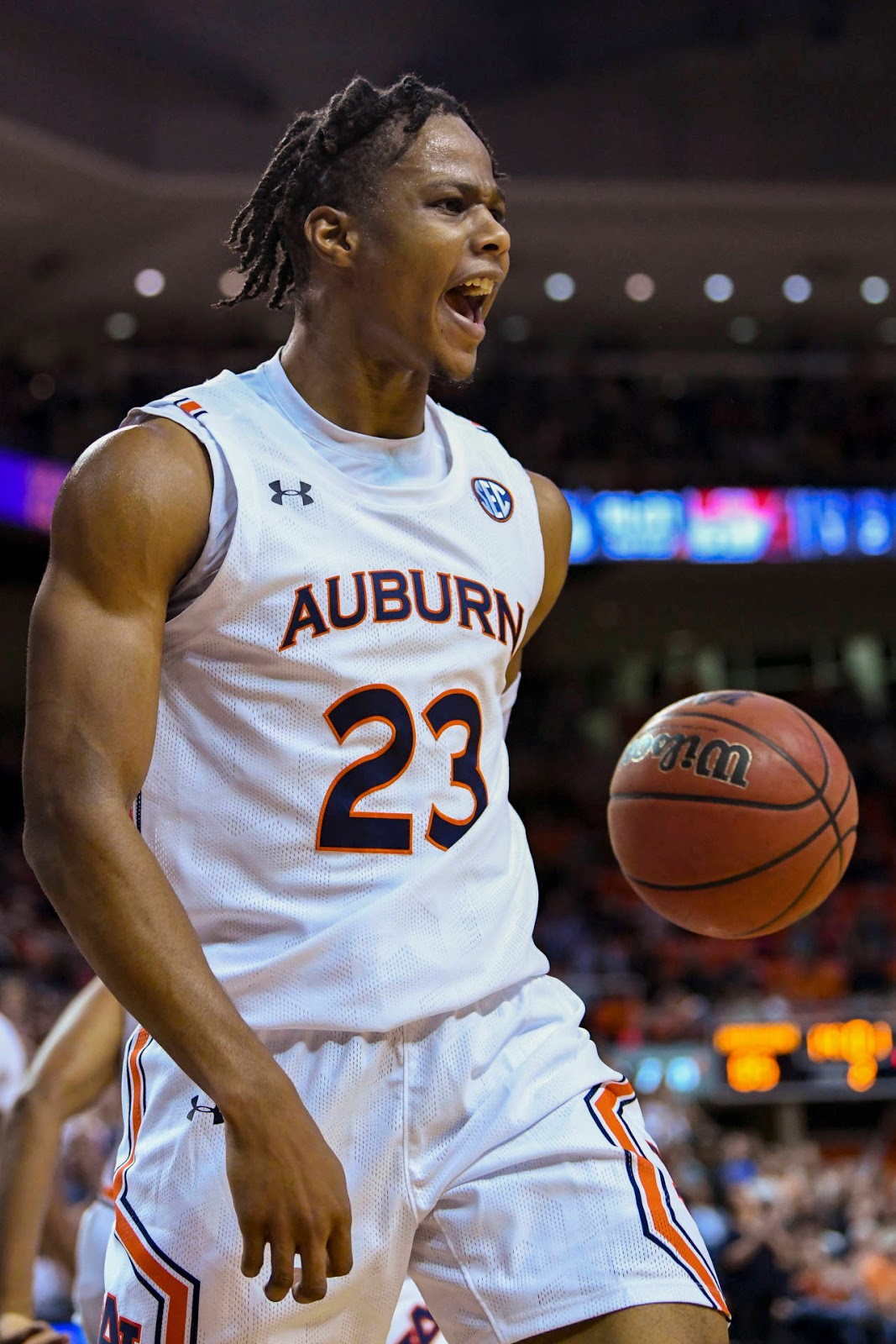
Isaac Okoro, G, Auburn
Atlanta has developed their frontcourt through John Collins and Clint Capela, but they could still use another threat next to Trae Young in the backcourt. Isaac Okoro impressed with Auburn in his lone collegiate season, and he's an elite defender who flashed an aggressive offensive game. He could be the type of prospect that surprises a lot of people with how high he goes.
7. Detroit Pistons
Tyrese Haliburton, G, Iowa State
If not for a broken wrist cost him a significant portion of the 2019-2020 campaign, Tyrese Haliburton might be even be higher on this board. His numbers speak for themselves while at Iowa State, and he's already a proven playmaker at a young age. Detroit's backcourt is amongst the weakest in the league, making this one a no-brainer.
8. New York Knicks
Killian Hayes, PG, France
The Knicks could be a possibility to move up in this Draft but if they stick firm at eight, they'll be hopeful a point guard, their biggest need, is available. The last French point guard to pass through the Big Apple (Frank Ntilikina) didn't work out, but Killian Hayes is significantly more polished at this point in his career, and a ready-made NBA floor general.
9. Washington Wizards
Onyeka Okongwu, F/C, USC
Don't be surprised if Okongwu goes much higher than the nine spot, but he could also slide just a little. He has a lot of attributes that NBA scouts love, such as his length, floor-stretching potential, and athleticism, but he's also fairly raw as well. Even after drafting Rui Hachimura a year ago, Washington continues to strengthen their frontcourt.
10. Phoenix Suns
Cole Anthony, PG, UNC
Playing through injuries and alongside the weakest UNC roster in years, Cole Anthony's lone season in the college ranks was somewhat underwhelming. However, there is no questioning that he has a skilled offensive game that should be able to make the transition to the next level. Pairing him with Devin Booker could create a thrilling backcourt once again in Phoenix.
11. San Antonio Spurs
Devin Vassell, G/F, Florida State
San Antonio is not playing in the NBA postseason for the first time in over two decades, but they can still get back in Western Conference contention with a strong off-season. They need better shooting, making Devin Vassell a nice prize in the late lottery. Vassell is the type of modern "3-and-D" that every NBA organization is looking for, and he is coming off a tremendous '19-'20 with FSU.
12. Sacramento Kings
Precious Achiuwa, F, Memphis
The Kings are still hopeful Marvin Bagley III can return healthy and become the impact post player they've lacked for some time now. Even if that does happen, they could use further help in the paint, and Precious Achiuwa offers significant upside. He's a ferocious rebounder and rim runner, but you'd like to see him develop a more well-rounded offensive game.
13. New Orleans Pelicans
Aaron Nesmith, G/F, Vanderbilt
J.J. Redick plays an important role for New Orleans as their floor-spacer, who allows Jrue Holiday, Brandon Ingram, and Zion Williamson to attack the hoop. However, Redick has just one more year left on the two-year deal he signed last off-season, and he's not getting any younger. Vanderbilt's Aaron Nesmith could take over his role as a sharpshooting wing that plays quality defense as well.
14. Boston Celtics
Theo Maledon, PG, France
Once again loaded with Draft picks this year, Boston takes a chance on a talented, but relatively untested commodity in Theo Maledon. Maledon has caught NBA eyes with his eye-popping athleticism and physical defense, but the holes in his game are on offense. Boston would be a great place for him to develop, as Kemba Walker's understudy.
15. Orlando Magic
Patrick Williams, F, Florida State
Orlando's lack of frontcourt depth has been exposed without Aaron Gordon playing in the bubble, making a forward a likely option at pick 15. Patrick Williams still has a long way to go, but he has significant two-way potential and he's young for this draft class, only 19 years old right now.
16. Portland Trail Blazers
R.J. Hampton, G, New Zealand
R.J. Hampton made waves when he decided to go the international route instead of going to college, and it will be interesting to see where he lands in this Draft. He didn't exactly overwhelm while playing in the NBL, but he's got prototypical combo guard size, and he's already a great passer. He seems like he'd be a fine complement with either Damian Lillard and C.J. McCollum.
17. Minnesota Timberwolves
Saddiq Bey, F, Villanova
Adding Anthony Edwards with the first overall selection, Minnesota uses the former Brooklyn selection to add an impactful forward in Saddiq Bey. Bey really flashed this past season at Villanova and he can help a roster in a variety of ways. He also doesn't need to score to impact games, which will be important on a roster that will already include Edwards, D'Angelo, and KAT.
18. Dallas Mavericks
Josh Green, G, Arizona
Josh Green's numbers this past season at Arizona don't exactly pop out at you, but he did show enough to land him somewhere around the mid-first round. He's an excellent spot up shooter and a plus defender, but he's not really a shot creator at this point in his career. He could be useful on a roster like Dallas, where he can take some attention away from Luka Doncic and Kristaps Porzingis on the perimeter.
19. Brooklyn Nets
Tyrese Maxey, G, Kentucky
I think Brooklyn goes best player available here without an obvious need to take care of, and Tyrese Maxey could end up being quite the get at 19. He's a proven scorer but he is also incredibly streaky, shooting a low percentage from three this past season at Kentucky. That could end up dropping him out of the lottery, but somebody will take a chance on his potential.
20. Miami Heat
Kira Lewis, PG, Alabama
Goran Dragic is nearing the end of his career and Kendrick Nunn probably isn't a long-term starter at the point guard spot. Those concerns should push Miami to use their first-rounder on a new floor general, and I like Lewis' game. He's lightning quick, fearless going to the rim, and an excellent leader. That would certainly check off a lot of boxes for the Heat.
21. Philadelphia Sixers
Tyrell Terry, G, Stanford
Philadelphia will be in store for a major house cleaning this summer after being swept in the first round at the hands of Boston. They'll be in the market for a point guard, even if Ben Simmons comes back healthy and ready to go. Tyrell Terry is more of a combo guard than a true PG, but he proved this past season at Stanford that he could do serious damage whenever he got the ball in his hands.
22. Denver Nuggets
Aleksej Pokusevski, F/C, Serbia
The last two international bigs Denver has drafted are Nikola Jokic and Rudy Gobert, a nice little run for the organization. They could use some further frontcourt help once again, and they go the international route once again by drafting Pokusevski. The Serbian is just 18 years old and already has shown serious long-term potential as a stretch five, but he'll need to add weight to his frame to survive the NBA.
23. Utah Jazz
Daniel Oturu, F/C, Minnesota
This is the range where we could see a bunch of big men go off the board, including Daniel Oturu out of Minnesota. Oturu impressed in his sophomore season with the Gophers, with an improved back-to-the-basket game but more importantly, decent touch from the outside. He'd be a nice fit in Utah, who lacks much in their frontcourt beyond Rudy Gobert.
24. Milwaukee Bucks
Desmond Bane, G, TCU
The Bucks are pretty clearly in win now mode as an organization, and they can add an immediate impact in Desmond Bane here. Bane, who is 22, shot 44% in his collegiate career with TCU, and he has good size for a wing in the NBA. He continues to add to Milwaukee's outside shooting, opening as many lanes as possible for Giannis.
25. Oklahoma City Thunder
Jahmi'us Ramsey, G, Texas Tech
Jahmi'us Ramsey really got the attention of NBA scouts in his lone season in Lubbock, flashing serious playmaking potential and the ability to hit big shots. He's still fairly streaky, but the tools are already there for him to succeed in the league, and he stays close to home by landing in Oklahoma City.
26. Boston Celtics
Isaiah Stewart, F/C, Washington
Despite being slightly undersized at 6'9", Isaiah Stewart makes up for it with a 7'4" wingspan and incredibly high motor. Even with the Huskies struggling most of the season in the Pac-12, Stewart put up strong numbers and proved he could play well against strong competition. Boston takes a chance on him late in the first, continuing to improve their depth up front.
27. New York Knicks
Jaden McDaniels, F, Washington
One pick after Stewart, his college teammate Jaden McDaniels goes off the board. McDaniels struggled at times in his lone freshman season, posting lower shooting numbers than hoped. He did still flash astounding athleticism and defensive prowess, and I don't see any downside to taking a chance on him late in the first round here.
28. Los Angeles Lakers
Vernon Carey, C, Duke
Both Javale McGee and Dwight Howard will hit free agency over the summer and there's a good chance neither returns as a Laker. Instead, Los Angeles uses their first-round selection to address the position with a high upside prospect in Vernon Carey. You'd like to see Carey grow different parts of his offensive game, but the talent is there.
29. Toronto Raptors
Nico Mannion, PG, Arizona
Fred VanVleet will be an unrestricted free agent this off-season and Kyle Lowry is 34 years old. Toronto has to continue to evaluate their future at point guard, and Nico Mannion could be quite the get so late in Round One. He struggled to shoot in his lone season with Arizona, but he's an elite passer and quality defender.
30. Boston Celtics
Zeke Nnaji, F/C, Arizona
The third Arizona Wildcat off the board, Zeke Nnaji certainly isn't the playmaker that Green or Mannion is, but he still showed to earn first-round billing. Although he's not a true seven-footer, Nnaji has established himself as a skilled rim protector and rebounder. He's not going to shot a lot of threes, but he also has a nice jumper for his position.

Monday, August 17, 2020

Preparing for the 2020 College Football Season: The Weirdest, Wackiest, Most Confusing Season of our Lifetimes

Being a college football fanatic in the midst of a global pandemic has been quite the emotional rollercoaster ride. That ride took a few extra twists and turns last week when the MAC, Pac-12 and Big Ten all announced their fall seasons would either be cancelled or delayed, likely until the spring of 2021. However, the ACC, SEC, and Big 12 chose not to follow along in the footsteps of the other two Power Five conferences, instead making it clear that they planned to go ahead with the 2020 campaign. A number of other smaller conferences appear to be following their lead, at least for the time being, in the Sun Belt, Conference USA, and American Athletic. All this recent movement has left the status of the 2020 season completely up in the air. It seems likely that we will see some FBS football this fall, but how much, and for how long? Will we see a Heisman winner, a National Champion, a College Football Playoff? I decided to take some time to make my best educated guesses on what this season will look like, and break down a few of the storylines to keep an eye on as we work our way through the month of August. Of course, the impact of COVID-19 can change things within the span of hours, and things could be outdated within a few days. That's just the reality we're living in during the year 2020, and this college football season will be no different.

Will the SEC, ACC, and Big 12 Actually Play?: Even with the Big Ten and Pac-12 calling off this fall officially, the other three Power Five conferences are sticking it out. Both the SEC and ACC had previously announced conference-only schedules (ACC also had one non-conference slot on their schedule, which seems highly unlikely now), with the Big 12 set to announce their own schedule at the time of publishing. The commitment to a season makes sense in some ways, and is surprising in others. These conferences all play in geographic areas where college football is more than a sport; it is the lifeblood of the culture down south, and it's also particularly important for local economies, even if fans aren't able to flock to stadiums on Saturdays. The pushback from fans in these respective areas would be tremendous, even if there was an outside hope for a season in the spring. With that being said, it is particularly risky when you consider how this pandemic has hit the areas where these conferences call home. Florida and Texas have been ravaged by COVID-19 over the last couple months, and the situation has not magically improved as of late. Even so, Florida State is scheduled to have a scrimmage this week, and Florida governor Ron DeSantis is pushing for the Florida-Florida State rivalry to be re-scheduled, and played this fall. In the ACC, Clemson was one of the programs hit particularly hard by the virus, as 37 football players tested positive in the month of June. Yet, the ACC's top program has entered into fall camp, and they will be the projected favorites once again when the league does indeed kick back off. All of this creates a very fluid and shaky situation for these leagues. If they can make it work, it will be huge now and in the long-term, for both their finances and their on-field play. If it doesn't it could spell absolute disaster for each of these universities. With so much still unknown, it's anybody's guess on what direction things will go.

Is a Spring Season Even Attainable?: This is an obvious question each of these conferences have had to weigh in their decision-making process these last few weeks. Pushing the season back does make sense in that it gives these universities more time to figure out how they plan to do all this, but I also think it's important to note the negatives here. Perhaps the most obvious is that we simply don't know if the public health situation will actually be better in a few months. There's hope that a vaccine will develop and/or there will be better testing protocols in place, but that's certainly not a given. If things don't get significantly better, there's absolutely zero chance a spring season is a better opportunity. An even bigger issue for me is how the timeline will work for a spring season. Even if some spring football is able to be played, one has to consider what the 2021 season would then look like. Are we going to be forcing these athletes to play two seasons in the span of eight months? If we're going to act like we actually care about the health of these athletes, that seems like an awfully poor way to show it. Another issue on timing is when exactly practices and games would take place. For a spring season, are practices going to be starting in January and February? That would be pretty difficult for northern teams, even with indoor practice facilities. Sure, teams already play in October and November, but the winter months are a whole different animal in the Midwest and Northeast. To me, the idea of spring football is merely a delay tactic, and not a serious possibility for the next college football season. I believe if your team isn't playing football this fall, they won't be playing again until the fall of 2021.

Will There Be a National Championship Game?: We probably should establish we are actually playing a season before the issue of crowning a National Champion is discussed, but this is a legitimate concern. The National Championship race is always debated by college football fans, and can you imagine if a significant chunk of the college football landscape isn't playing? It's hard for me to imagine a College Football Playoff occurring this season. There are just too many moving parts and too many moving questions, and it would be particularly difficult to evaluate individual teams from different conferences when there is no play amongst different leagues. What I think will happen? Each league will play their conference-only schedule and their conference championship game, and then call the season good. I just don't think these conferences are going to be able to figure out a way to do anything more with all these question marks, and that's again making the assumption we see any football at all. With each league crowning their own champion but not moving further, I think the "National Champion" will be up for interoperation, in much the same way it was prior to the BCS era. That's not going to be popular amongst fans, but it seems like the most realistic scenario. Prepare for a whole lot of heated, never-ending debates if this scenario does indeed hold true. If you thought the Alabama/UCF National Champion conversation in 2017 was insufferable, a 2020 debate will be even worse.

What Financial Impact Will a Lost 2020 Season Have?: This is the thing that should really scare fans of collegiate athletics, not just college football. Personally, I can survive a fall without college football, and I think most fans can too. Sure it will be tough, but everybody is being forced to make sacrifices in the year 2020 and giving up one season of football doesn't seem like a major one to make. The real concern is what a lost season would mean financially for all these universities. The amount of money and revenue brought in by football is astronomical when you compare it to other collegiate sports. Just look at LSU as one example (left); only football, men's basketball and baseball brought in money to the athletics department in fiscal year 2019. Football brought in roughly $56 million, while men's basketball was the second biggest earner at just $1.6 million. Outside of baseball, every other sport lost money, and some of these sports saw a relatively significant loss. Now cut out football completely out of that equation; what options does an athletics department have but to cut sports left and right? There's simply going to be no way for athletics departments to survive but slashing a bunch of these programs, and it's going to happen across the country. Look at Stanford, a school that is well-known for boasting a strong athletics program top-to-bottom. They announced they would be 11 varsity sports programs by the end of 2020-21, a list that includes fencing, field hockey, rowing, and more. It isn't just going to be Olympics sports or less-popular ones that are going to be on the chopping block either; you're going to be see football, basketball, and baseball programs cut across the country. It's a particularly concerning time for the life and spirit of collegiate athletics, and it's hard to imagine a lot of these schools or conferences being able to recover.
I understand the frustration of players who are pointing to this season as being "only about the money", I really do. These athletes are essentially being used as guinea pigs in the midst of a global pandemic, in a rigged system that will primarily benefit those at the top of the ladder. But, the reality of college football for a lot of places is that it is all about the money. Football is just such a massive earner, and really is the driving force behind collegiate athletics. It's hard not to realize the devastating financial impact a lost season would have, and it would be foolish to think that isn't on the mind of a lot of college football leadership as they make these difficult decisions.

What About the Smaller FBS Leagues?: This is one of the details getting lost in the shuffle of the Power Five leagues: that smaller conferences are also suiting up to play 2020 as normal (or as close to normal as possible). The Sun Belt, Conference USA and American Athletic Conference will all play a modified schedule, but they are going forward likely to play. In fact, most of the programs in these leagues have already been practicing in fall camp for a couple weeks now, and they are as ready as anybody in the country to play, in terms of on-the-field product. As a fan of college football, I'd love to see any program play that feels like they can do it in a safe way. The case remains the same for these Group of Five leagues; if they figure out a way to do it safely, do it. It will be naturally more difficult for a smaller conference than a Power Five to play, considering they just don't have the resources of the bigger schools. Perhaps that could allow some more creative ways to ensure a safe environment for the student-athletes, which I'm all for.

What Other Long-Term Effects Will the 2020 Season Create (Beyond Financial)?: The good thing about the chaos involving the 2020 season is that it should teach university administrators and presidents some important lessons. First off, it should teach all athletic departments the value of using their money wisely. For years, college football leadership has blown away millions of dollars in facility upgrades, coach buy-outs, and fancy stadium renovations. That's not to say that money has been wasted by any means, but a lot of the spending at the collegiate level has been reckless simply because there is so much money flowing through the sport on a yearly basis. With so many financial questions left to deal with, I think 2020 will teach the college football higher-ups to be a little bit smarter with their money. It should also teach the same higher-ups a valuable lesson about planning. Leadership really had no idea what to do once this pandemic became a part of everyday life, and they instead spent the last few months simply hoping something would change. I think 2020 has taught us all that we should prepare and plan for any circumstance because, as this year has taught us, anything can happen.
The biggest impact the 2020 season will have long-term will likely come on the recruiting front. If the ACC, SEC, and Big 12 can actually make this season work, it's a major recruiting tool. They can essentially tout their commitment to their players, and argue that they are the "true" Power Five leagues. It's a massive recruiting advantage for schools that already have geographic advantages built in when considering college football's talent pool. Those geographic advantages are also going to be even more important in a post-COVID world. More and more, players are going to realize the importance of staying close to home as the fallout from this pandemic continues. I think it's going to create less instances of high schoolers going across the country to play ball, when they could stay closer to home. If you look at the 2021 Class, we already have seen a trend of players staying closer to home in their respective commitments, which could continue into our uncertain future. If it does, this gives programs located in recruiting hotbeds even more distinct advantages than those generally considered outposts or outliers. We'll see if this trend does actually hold, as college football recruiting can change rapidly.

What Now?: These next few weeks have the chance to be some of the most important in college football history. If these conferences can figure out a way to play in 2020 and keep their players as safe as possible, it creates a massive power gap in FBS football. It would put tremendous pressure on the Big Ten and Pac-12, who are already feeling the heat from their decisions to postpone last week. If the ACC, SEC, and Big 12 can't make it work, expect major blowback from fans, boosters and alums, and some serious long-term financial questions that could threaten collegiate athletics as a whole. There is just so much uncertainty and so many questions, but such is the reality of living in the year 2020. Either way, all I can say? Stay tuned.

Thursday, August 6, 2020

Post-NBA Draft Withdrawal Deadline College Basketball Top 25

Ayo Dosunmu and Illinois, No. 7
August 3rd is not typically an important date on the college basketball calendar, but the delayed NBAmy last Top 25, published shortly after the cancellation of the NCAA Tournament, making this exercise even more fun.
Draft ended up making it the most crucial day of the college basketball off-season. It was the final day for players who had previously entered their name in the NBA Draft to withdraw and return to school. Deadline day always gives college basketball fans plenty to talk about, but this year seemed to be even more exciting than usual. A number of huge names opted to return to school, ensuring the sport's return in 2020-21 will be an absolute thrill. Now that we know who's staying and who's going, it's time to update the Top 25 accordingly. A lot has changed since

1. Villanova Wildcats
Villanova's outlook for next season didn't change much these last few months as their lone loss remains Saddiq Bey, who was always going to turn pro. Bey is certainly a notable subtraction, but the Wildcats return every other significant piece from one of college basketball's most consistent programs. Steady guard Collin Gillespie returns to run the offense, and is joined by Justin Moore, Jermaine Samuels and Bryan Antoine. Add in Tulane transfer Caleb Daniels, who averaged nearly 17 PPG with the Green Wave last season, and there is no shortage of talent or depth on this roster. Could Jay Wright win his third National Title since 2015 with this group? It certainly looks like a real possibility.

2. Gonzaga Bulldogs
The Bulldogs recorded the top spot in my last Top 25 iteration, but they had an unexpected departure this off-season when Filip Petrusev decided to turn pro. Petrusev was never considered a big name in NBA Draft circles, but he left to take a professional opportunity overseas. Even so, Gonzaga returns a bunch of talent, with Corey Kispert deciding to withdraw his name from the Draft. He'll be joined by veteran Joel Ayayi and sophomore Drew Timme. On the newcomer front, five-star guard Jalen Suggs will almost surely start right away, and big man Oumar Ballo has the talent to lead the frontcourt.

3. Baylor Bears
Baylor was another team whose outlook didn't change a lot as a result of the NBA Draft withdrawal deadline, as their core has been locked in place for a few months now. They bring back Jared Butler, MaCio Teague, Tristan Clark and Mark Vital, one of the best defenders in college basketball. All four of those guys were instrumental in the Bears' strong 2019-20 campaign, as they locked down the No. 1 overall ranking for a number of weeks. Presbyterian transfer Adam Flagler and true frosh Dain Dainja also add much-needed depth. With all that, it's hard not see Baylor as the Big 12 favorite next fall, particularly with Kansas set to enter a rebuilding stage.

4. Iowa Hawkeyes
The biggest name to withdraw from the NBA Draft was undoubtedly Luka Garza. Garza instantly becomes the National Player of the Year favorite looking ahead to next year and if he's able to get even more support down low, he could truly be unstoppable. However, this Iowa team is more than just Garza. They feature an abundance of talented guards who can create, with Joe Weiskemp, Jordan Bohannon and C.J. Frederick being the big names. The Hawkeyes will have to improve on defense to be worthy of a Top 5 ranking, but they could enter this season as the Big Ten favorites.

5. Virginia Cavaliers
Tony Bennett and the Cavaliers are technically still the reigning National Champions, and they'll be a tough out once again. Kihei Clark, Jay Huff and Casey Morsell took a little bit of time to get going this past season, but by March they were playing as well as anybody in the ACC. That core should be ready to roll from the get-go this year, and they'll have help in the form of Marquette transfer Sam Hauser. Hauser averaged 14.9 points per game two seasons ago for the Golden Eagles, and he has plenty of experience playing in tough environments.

6. Duke Blue Devils
Per usual, Duke loses a number of youngsters to the NBA, namely center Vernon Carey, wing Cassius Stanley, and point guard Tre Jones. Jones will be the toughest to replace, as the veteran point guard was the unquestioned leader of this team, and one of the best defenders in the country. Coach K does still have some holdovers returning, in the form of forward Matthew Hurt and Wendell Moore. Those two will provide the "experience" while a host of fresh faces arrive, most notably five-star Jalen Johnson.

7. Illinois Fighting Illini
The other big winner of the NBA Draft withdrawal deadline was Illinois, who learned that they would get both Ayo Dosunmu and Kofi Cockburn back in Champaign for another year. Dosunmu is an explosive scorer who really emerged down the stretch for the Illini in '19-'20, while Cockburn is the type of physical big you need to win in the Big Ten. Those two will be aided by a number of other returnees, namely guard Trent Frazier and swingman Giorgi Benhanishvili. On paper, this looks like the best Illinois team since the 2005 team, who were National Runner-Ups.

8. Michigan State Spartans
Michigan State may lose one of their best players in program history in the form of Cassius Winston, but Tom Izzo has proven time and time again that he can reload in East Lansing. Sophomore Rocket Watts is expected to take over for Winston as the point guard, and he'll be joined by a group of athletic, talented playmakers that includes Aaron Henry, Gabe Brown, and Malik Hall. The Spartans could also utilize Joey Hauser, the younger brother of Sam, who was ineligible a year ago. There's a good shot he starts right away for the Spartans.

9. Kansas Jayhawks
There's a good chance Kansas enters 2020-21 in uncharted territory, not being the league's favorite. That doesn't mean they won't still be a Final Four threat, even as Devon Dotson and Udoka Azuikbe, their two most important pieces, move on. Bill Self will have to rely on a number of role players to step up, most notably Marcus Garrett, David McCormack, and Christian Braun. The big newcomer is Bryce Thompson, who is a five-star shooting guard from Tulsa, Oklahoma.

10. Wisconsin Badgers
The Badgers ended this past season on a tear and might have been ready for a deep postseason run if the Tournament wasn't cancelled. They had a great off-season, retaining nearly every single important piece, with the lone departure being Brevin Pritzl. D'Mitrik Trice, Nate Reuvers and Brad Davison have all proven themselves in the Big Ten, and Micah Potter could be in store for a monster year now that he is completely eligible. Wisconsin may not have a "star", but returning your top five scorers from a team that claimed a share of the Big Ten Title is nothing to scoff at.

11. Tennessee Volunteers
Yves Pons' decision to come back to school might secure Tennessee as the SEC favorite heading into next season. They return everybody but Lamonte Turner and Jordan Bowden, and head coach Rick Barnes brings in one of the better recruiting classes in the entire nation, headlined by Keon Johnson and Jaden Springer. Both will see heavy minutes right away, and add the scoring punch that this Volunteers team lacked for a large part of last season.

12. Kentucky Wildcats
Out of respect to John Calipari and what he's done at Kentucky, I keep the Wildcats in the mix for the Top 10, but they are losing a ton. Without their top six scorers from last season, Calipari will once again have to rely on completely untested freshmen and transfers. B.J. Boston, Terrence Clarke and Devin Askew are extremely talented, but we've seen Calipari-coached teams struggle to adjust to the collegiate game. Adding Creighton transfer Davion Mintz helps, but this could be still a very thin roster if transfer Oliver Sarr doesn't get a waiver.

13. Texas Tech Red Raiders
There are some notable pieces gone from Lubbock, but head coach Chris Beard was able to once again work his magic, landing perhaps the biggest name on the transfer market in the form of Mac McClung. McClung and VCU transfer Marcus Santos-Silva will join a veteran-laden group that includes Kyler Edwards, Terence Shannon and Avery Benson. It might not be enough to overtake Baylor or Kansas in the Big 12, but it should be enough to keep them in the hunt.

14. Houston Cougars
Kelvin Sampson has done a truly incredibly job in his return to coaching, building Houston into the American Athletic Conference's best program at the moment. He returns a bunch from a dangerous Cougar team that includes DeJon Jarreau, Caleb Mills, Quentin Grimes, and Fabian White. Simply consider this when you see how quickly Houston has risen: Grimes, a former Kansas transfer and five-star recruit, might not even start this year. That certainly wouldn't have been the case at UH in the years prior to Sampson's arrival.

15. West Virginia Mountaineers
The return of Derek Culver and Oscar Tshiebwe bodes extremely well for a West Virginia team that faded down the stretch last season. Culver and Tshiebwe should help set the tone for a physical, aggressive WVU team, but they'll need others to step up on the outside. The Mountaineers struggled down the stretch because of poor shooting, and they'll get nothing easy in the Big 12. Point guard Miles McBride was named to the conference's All-Freshman Team last year, and he could be ready for a breakout.

16. North Carolina Tar Heels
It was an awfully forgettable '19-'20 for the North Carolina Tar Heels, but expect them to be back in full force this upcoming season. Garrison Brooks and Armando Bacot could form one of the best backcourts in the entire country if they play up to their potential, and Roy Williams brought in one of the best recruiting classes in school history. Caleb Love is expected to take over for Cole Anthony at point guard, and the five-star guard appears ready to run the show.

17. Creighton Bluejays
The Bluejays take quite the stumble in these rankings due to the loss of Ty-Shon Alexander, who kept his name in the Draft. Alexander was probably the Big East Player of the Year favorite if he returned, but his absence will force Creighton to look elsewhere for instant offense. The cupboard is not bare, as Marcus Zegarowski and Denzel Mahoney helping lead the way. The frontcourt might be a slight question mark, as depth is a concern at this point in the off-season.

18. Arizona State Sun Devils
Remy Martin's decision to come back to Tempe moves Arizona State from a fringe Top 25 team into a legit Pac-12 Title contender. He'll be aided by a nucleus that includes Alonzo Verge and highly touted newcomer Josh Christopher. Christopher, a five-star recruit from California, was projected to go to Michigan but made the surprising decision to play for the Sun Devils. He may be the most talented player Arizona State has had on campus since James Harden.

19. Ohio State Buckeyes
The Buckeyes might have a hard time keeping up with the elite of the Big Ten next year, but they still have serious potential. Kaleb Wesson is an obvious loss, but most of Ohio State's core remains intact. That includes Duane Washington, C.J. Walker, E.J. Liddell, and glue guy Kyle Young. Ohio State also landed one of the top grad transfers on the market in Harvard's Seth Towns, who should anchor their frontcourt.

20. Florida State Seminoles
Leonard Hamilton has built Florida State into a consistent face atop the ACC, and they'll be tough once again in '20-'21. Patrick Williams, Devin Vassell and Trent Forrest are all significant losses, but the Seminoles still return M.J. Walker, Raiquan Gray, and Anthony Polite. Plus, Hamilton managed to reel in a rare highly prized recruit, as Scottie Barnes comes to Tallahassee. The Montverde Academy product is rated as the top power forward in the nation, according to 247Sports.

21. Rutgers Scarlet Knights
The resurgence of Rutgers was one of the truly great stories of last season, even if there was no satisfying conclusion at the end of it. The good news for Steve Pikiell is that he brings back nearly everyone from an NCAA Tournament team, namely Geo Baker, Myles Johnson, and Ron Harper. Rutgers will be incredibly deep, with eight of their top nine scorers back in the fold. That will be huge once the grind of the Big Ten schedule begins.

22. UCLA Bruins
Mick Cronin engineered quite the turnaround in Westwood in Year One, despite a shaky start. Now, the Bruins have some momentum entering this next fall, with Chris Smith announcing he is coming back. Smith averaged 13.1 PPG as a junior last year, and the lengthy 6'9" guard is one of the better on-ball defenders in the Pac-12. He is joined by Tyger Campbell, Cody Riley, and Jalen Hill, plus the immediately eligible Kentucky transfer, Johnny Juzang. Losing highly touted newcomer Daisen Nix, who decided to go to the G-League hurts.

23. Texas Longhorns
Once one of the most sought after coaches in the country, Shaka Smart's seat is starting to warm in Austin. The good news is that he returns a bunch for 2020, and adds on a five-star recruit in the form of Greg Brown. Brown was ranked as the top player in the state of Texas and Smart managed to keep him away from a number of other blue bloods, namely Kentucky. He joins shot-blocking machine Jericho Sims in one of the Big 12's best frontcourts.

24. LSU Tigers
LSU head coach Will Wade had a great start to his August, as three players removed their names from the draft pool and decided to return to Baton Rouge. That list included Ja'Vonte Smart, Darius Days, and Trendon Watford, who all seemed 50-50 on whether they were returning or leaving prior to their announcements. Wade also adds on another strong recruiting class, meaning his Tigers could look to challenge Kentucky and Tennessee at the top of the league.

25. Arkansas Razorbacks
Arkansas second-year coach Eric Musselman also got good news on deadline day when one of his top playmakers, Isaiah Joe, decided he was returning to school. Joe was instrumental for the Razorbacks when he was healthy, as the team went 19-7 when he was in the lineup. He will be joined by a bunch of fresh faces, as Mussleman loaded up on transfers. Indiana and Northern Kentucky grad transfers Justin Smith and Jalen Tate should contribute right away.

Friday, July 31, 2020

NBA Draft 2020 Player Profile: James Wiseman

It wasn't Anthony Edwards, or La'Melo Ball, or even Cole Anthony who ranked as ESPN's No. 1 prospect in the Class of 2020. No, it was James Wiseman, a seven-footer out of Memphis East High School who hoped to stay in the city for his college years. However, Wiseman ran into problems with the NCAA before he ever really got rolling with the Tigers, playing in just three games before announcing he would instead focus on the 2020 NBA Draft. That means it will likely be nearly a year between Wiseman's last game of organized basketball, only adding to the intrigue surrounding the 19-year-old. There are no questions about the big man's talent, but will his game be able to translate to the modern NBA?

Quick Facts
James Wiseman
From: Nashville, Tennessee
Height & Weight: 7'1", 250 pounds
Position: Center
Team: Memphis Tigers

Strengths


  • Size and rim protecting ability. It may sound like an empty complement, but James Wiseman looks like an NBA player. He stands at 7'1" with a 7'5" wingspan and 9'6" standing reach. Those are all favorable measurements for the NBA, even in a league that seems to focus on size and length like never before. Wiseman also uses that size in a way that can impact games; he's a great shot-blocker and he's incredibly active around the rim. Even if he doesn't block shots, Wiseman is the type of player that will effect every single shot that goes up. That's an obvious plus for him, and NBA teams are always looking for proven rim protectors.
  • Excellent touch and finishing around the rim. In three games for Memphis, Wiseman recorded 19.7 PPG on 77% shooting from the field. Obviously, those numbers are going to be inflated when you play a total of just 69 total minutes, but they were generally consistent with what Wiseman was able to do in high school. He has a wide variety of post moves that allow him to get his shot off, and he has a nice, soft touch. Wiseman is also terrific at finishing off lobs and put-back jams. His reach allows him to play above the rim, and he has the natural instincts and athleticism to get those easy put-back opportunities. 
  • Terrific rebounder, particularly on offense. You would hope that a seven-footer built like Wiseman would be effective on the boards, but that doesn't take away from his strengths. Again, his instincts and feel for rebounding are impressive for his age, and pretty advanced. He's also an incredibly hard worker, which makes him a real force on the offensive glass. It's tough to move him off the block, and he finds ways to get tips off the basket. In those three games with the Tigers, Wiseman recorded 4.3 offensive rebounds per game in just 23 minutes per game. Again, those numbers are going to be a little bit inflated, but that's still pretty mind-boggling production that he should be able to carry over to the NBA.
  • Mobile big that can run the floor in transition and defend multiple spots. This is the thing I find most impressive about watching Wiseman. Despite his size and length, he moves incredibly well, and has significant rim running potential for the next level. On defense, he's going to be used as a rim protector but in the modern NBA, he'll also be asked to move around quite a bit and defend on the perimeter. He has shown that he can do that, and he should be even more effective with NBA-level coaching.
Weaknesses

  • Zero floor stretching ability at this point in his career. This is going to be the most prevalent knock you'll see against Wiseman, and it's somewhat understandable. The way the game of basketball is moving, big men are forced to play on the perimeter and create more than they ever have before. Sure, Wiseman has proven he can defend away from the rim, but can he consistently hit 20-footers? At this point in his career, it doesn't appear so. That doesn't mean he can't grow that part of his game, but his offensive game is still relatively limited right now. It will take at least a few years of development for him to really show his offensive potential, and I think he'll need to land in the right situation to do so.
  • Still very unproven beyond the high school level. This is a weakness that I wouldn't qualify as a major negative for the big man, as a number of people have made the jump to the NBA without much difficulty even without playing college ball. With that being said, you'd like to see how Wiseman matches up against top competition prior to his jump to the pros. His athleticism and pure talent made him so dominant in high school, but the type of defenders he'll see in the NBA are significantly different. He is going to have to grow and evolve different parts of his game in order to succeed at the next level. That doesn't mean he can't do that, but you'd like to see a fuller body of work from Wiseman. Just look at La'Melo Ball, who didn't go to college but still got important basketball experience by playing in Australia's NBL the past season, going up against real professionals in meaningful games. Again, I wouldn't categorize this as a major downfall for Wiseman, but it will be on NBA team's minds when they consider taking the big man.
  • Questions about consistency, focus game-to-game. Naturally, 19-year-old basketball players are going to be fairly inconsistent, as they continue to hone their craft and round out their games. Such is the case for Wiseman, who had a reputation in high school for incredibly streaky play. He obviously had his dominant moments and lots of them, but he did lose his focus at times and get into early foul trouble, which completely took him out of the game. This is something we see from young bigs often, particularly those who are considered good shot-blockers, because they can often be so eager to make defensive plays. He's going to have to show he can play a lot of minutes and maintain his focus on both ends of the floor. That is another issue that could be solved with more time, but it's certainly a question mark for Wiseman at this point, and one we didn't see improvement on in his short collegiate time. 
My Take
Of the three prospects I've featured so far in my "NBA Draft 2020 Player Profile" series, Wiseman is the one I feel the least confident in. If we had seen a player like him entering the NBA a decade ago, he'd probably be a shoe-in for a Top 3 selection, with his blend of athleticism, size, and overall upside. But, the center position in the league today is just so different. There's so much emphasis put on floor-spacing, and being able to do a lot of different things, and Wiseman is pretty limited at this point in his career. Of course, he has the upside to really grow into his game, but he's just so unproven right now, and he hasn't been able to change that narrative by impressive in pre-Draft workouts or the NBA Draft Combine, yet. Currently, he ranks No. 4 on my NBA Draft Big Board (behind Ball, Anthony Edwards and forward Deni Avdija), but perhaps he could change that as the NBA calendar begins to return to normal over the coming weeks and months.

Where He'll Go
Even with notable question marks, there's a very good chance Wiseman lands somewhere in the Top 5 of the 2020 NBA Draft, maybe even Top 3. This year's class is very underwhelming in terms of big men, with the only other name seriously rivaling Wiseman being USC's Onyeka Okongwu. Wiseman could really benefit from the fact that a number of the likely teams at the top of this Draft need another big. That includes Golden State, who reportedly really likes Wiseman, Atlanta, Minnesota and the New York Knicks. If things break right for Wiseman he could even be considered a strong candidate for the No. 1 pick, depending on how the pre-Draft process plays out.


Thursday, July 23, 2020

NCAA's Transfer Waiver Problem is the Worst Thing About College Football Right Now

J.T. Daniels, Georgia
College football, for all its greatness and glory, has never been a sport completely devoid of problems. For nearly its entire history, the sport has dealt with questions of what it truly means to be a "student-athlete", the obvious institutional and financial differences between the sport's "haves" and "have-nots" and recently, questions about player's long-term health.

The invention of the sport's transfer portal a few years ago seemed like a logical next step in college football's evolution. Transfers are becoming increasingly common today, and even more important in the college football landscape. However, the invention of the portal has coincided with an issue that threatens the core of college competition: transfer waivers. To the casual college football observer, the difference between a player gaining immediate eligibility and having to sit out the traditional one-year penalty may not seem like a huge deal. But the way these waivers are being distributed and used consistently tilts in the favor of blue blood programs and big-name players. Essentially, the NCAA is playing favorites with the programs and players that bring in the most money (the programs they like the most), an appalling notion in the modern age of collegiate athletics.

To understand the warped logic being applied to NCAA transfer waivers, one simply has to look at some of the biggest transfers of the last few seasons. Following the 2018 campaign, Georgia QB Justin Fields, previously the nation's No. 1 quarterback coming out of high school, announced that he would be transferring to Ohio State. Around the same time, Ohio State's projected starting QB for the 2019 season, Tate Martell, saw the writing on the wall with Fields arriving and announced he would transfer to Miami. Neither transfer decision was necessarily shocking; Fields wasn't going to beat out Jake Fromm at UGA and wanted to play for Ryan Day at Ohio State, while Martell wanted to start, and didn't believe he could beat out Fields in Columbus. What is shocking is how quickly both were able to gain immediate eligibility for the upcoming 2019 season. Fields enrolled in classes in mid-January and was ruled eligible exactly a month later. Martell announced he would transfer a few weeks after Fields and also earned immediate eligibility in about a month. The reason for both of them earning a waiver so quickly? Still unclear. To be fair to Fields there was other circumstances that made it understandable why he would leave Georgia. During his freshman year in 2018, he was referred to as a racist slur by a member of UGA's baseball team during a loss to Tennessee. Certainly one could understand why Fields would not want to play for the Bulldogs following the incident, and the comments were used as "mitigating circumstances" for his waiver. With that being said, one has to question how these comments warranted immediate eligibility at the next university he would enroll. And Martell's reasons for earning a waiver? Beyond disagreements with some members of the coaching staff, there doesn't appear to be any clear reason given. In addition to those two last off-season, former USC quarterback J.T. Daniels made waves earlier this past off-season when he announced his decision to transfer to Georgia. He received word that he would be eligible to play in the 2020 season (assuming it happens) less than eight weeks after the decision to transfer. Like Fields, Daniels did have some circumstances that allowed him to earn eligibility. He missed nearly all of 2019 with a torn ACL, and he used the missed season as his required "redshirt" year during the transfer process.

Considering the NCAA allowed these high-profile names immediate waivers through relatively vague circumstances, one would assume that would allow to others also looking to enroll at new schools. Not quite. The NCAA's unclear rules suddenly become crystal-clear when they involve players enrolling at smaller Power Five or Group of Five schools. Simply look at tight end Luke Ford, who began his career at Georgia. Ford, a native of Carterville, IL., opted to transfer to Illinois to be closer to his family and his ill grandfather but his waiver for immediate eligibility was denied in April of 2019. Ford decided to appeal the waiver and was denied a second time by the NCAA. Their reasoning? Carterville, Illinois is roughly 190 miles away from the campus of Illinois, and the NCAA had set a threshold of 100 miles for gaining a waiver because of family reasons. A similar situation occurred for Brock Hoffman, an offensive linemen who decided to transfer from Coastal Carolina to Virginia Tech. Hoffman was hopeful to also be closer to home to play in front of his family and mother, who was recovering from a brain tumor. Once again, Hoffman's home was ruled outside the required NCAA radius, in a story that's pretty sickening to read.  If the NCAA wants to institute these strict rules for players with reasonable circumstances to play, so be it. But, why aren't these rules applied in the same way to Fields, Martell, and Daniels, cases that seemed to be left intentionally unclear and confusing?

It isn't just the rules that seem to intentionally vague and unclear, but how the timing process works on individual waivers. Again, Daniels, Fields, and Martell all saw their immediate eligibility waivers clear within the span of two months. Compared to that trio, less high-profile college players are forced to wait months and months to await any clear indication on their NCAA futures. Take Joey Gatewood and Phil Jurkovec, two QB transfers who enrolled to play at Kentucky and Boston College, respectively. Gatewood announced his transfer last December and still has no idea whether he'll be able to play in 2020. Jurkovec opted to transfer just a few weeks later, in early January, and also doesn't know his status for this next fall (again, assuming it happens in some form). Even look at Cade Mays, Justin Fields former teammate at Georgia. He decided to transfer in January and also has a reasonable exemption for leaving, in a truly bizarre story. He also has not heard his status for the fall, making Daniels quick waiver decision so shocking. Timing may not seem ultra-important when it comes to NCAA waivers, but imagine if COVID-19 was not a factor this season. These players would be rolling into fall camp still uncertain about their status. That be crucial for a player, especially those in the heat of position battles, which Jurkovec and Gatewood are in at their new schools.

All of this isn't to say that I'm against the transfer process as a whole. I think it's a great thing that we have reached the "player empowerment" era across the sports landscape. If you're a true college football fan, I believe you shouldn't have an issue with players making decisions that they believe is in the best interest for themselves, even if that means leaving your favorite school. The NCAA waiving the one-year transfer penalty altogether and allowing all players one transfer without having to sit out seems like a logical step in the right direction, and it would clear up a significant problem with transfer waivers. To the NCAA's credit, this is a move that has been discussed and will be voted on, although the vote was pushed back as a result of COVID-19. There are valid concerns about how this could affect roster management and depth, but coaches will be able to adapt, as they've done countless times before.

Now, I know there are always things going on behind the scenes that can have an effect on transfer waivers. There could certainly be understandable reasons for Daniels immediate waiver, and Fields and Martell before that. However, it's hard for any college football fan or supporter to view these waivers without seeing a pretty clear double standard that seems especially slanted in one direction. Competition and parity are two of the things that make college football so fascinating year-in, year-out, and it's almost like the NCAA is openly picking against that. The NCAA's involvement and overt favoritism has really degraded the transfer process, something that should be a positive option for players has turned into a game about blue bloods and money. There's more to college football than that, and the NCAA, who prides themselves on the notion of the "student athlete" should practice what they preach.

Wednesday, July 15, 2020

NBA Mock Draft 2020: Edition 2 (Restart Edition)

Isaac Okoro, Auburn
It has been four months since the 2020 NBA season was postponed as a result of the Covid-19 pandemic, but basketball appears to be on the horizon. We are just two weeks away from the games restarting in "The Bubble" in Orlando. Even though the season has been on hold, NBA teams are never not scouting future talent, meaning the 2020 Draft board has likely shifted quite a bit.

1. Golden State Warriors
Anthony Edwards, G, Georgia
There is not a clear No. 1 prospect at this juncture in the NBA Draft cycle, but Georgia's Anthony Edwards is the likely favorite right now. Although he was far from perfect in his lone season with the Bulldogs, scouts love his explosiveness and scoring potential. Golden State's struggles without Steph Curry and Klay Thompson have made it clear they have to add to a thin backcourt if they want to compete in the Western Conference once again.
2. Cleveland Cavaliers
James Wiseman, C, Memphis
It's hard to know where James Wiseman will fall in this upcoming Draft. He's extremely talented, but he didn't play very much at all with Memphis this past season, and his game is old-school when you consider the direction the league is going. Even so, Cleveland might feel motivated to snag a new franchise big, especially with their last two NBA Draft first-round selections being guards.
3. Minnesota Timberwolves
La'Melo Ball, G, Australia
Minnesota is going to be a fascinating team to watch this next off-season and going forward. They still believe a core of Karl Anthony-Towns and D'Angelo Russell can win in the Western Conference, but you still get the feeling they're a few pieces away from any serious contention. With their roster likely to be in flux as they continue to build in the future, best player available here would make the most sense. In my opinion, that is La'Melo Ball.
4. Atlanta Hawks
Isaac Okoro, G/F, Auburn
Atlanta's backcourt of Trae Young and Kevin Huerter is fun to watch when both are shooting the ball well, but neither are very good defenders. If the Hawks are hoping to take the next step, they'll need a better defensive team, particularly on the wings. Isaac Okoro is the perfect solution, and he's incredibly efficient too; he shot over 51 percent from the field in his lone season with Auburn.
5. Detroit Pistons
Obi Toppin, F, Dayton
The best player in college basketball this past season, Obi Toppin could go anywhere in the 2020 NBA Draft. He has the talent to legitimately be the first off the board, but it also wouldn't be shocking if he slips. Detroit needs all the help they can get offensively, and Toppin will inject some much-needed energy into the organization.
6. New York Knicks
Deni Avdija, F, Israel
While college basketball stars have been sidelined for months, Deni Avdija could see an opportunity to rise up boards as his team, Maccabi Tel Aviv, returns to action. NBA scouts are really intrigued by Avdija's smooth offensive game, and he's got ideal size for a forward at 6'9". Knicks fans might not necessarily love this selection, but Avdija is the type of guy that should be able to handle the pressure.
7. Chicago Bulls
Tyrese Haliburton, G, Iowa State
Although the Bulls drafted Coby White in the first round a year ago, Tyrese Haliburton may be too interesting to pass up here. The Iowa State product has great size (6'5"), can play and defend multiple positions, and passes the ball extremely well. He could even go higher on this board if not for the wrist injury suffered late this season that may make NBA teams wary.
8. Charlotte Hornets
Onyeka Okongwu, F/C, USC
Onyeka Okongwu didn't get a ton of attention playing on the West Coast this year, but he was extremely productive for USC and has a chance to be a Top 5 pick. He's an elite athlete that moves very well for his size, he has great touch around the rim, and he can stretch the floor a little. Charlotte desperately needs frontcourt help, making this is a no-brainer.
9. Washington Wizards
Killian Hayes, PG, France
There's a lot of variation in how NBA scouts and media people view Killian Hayes. Some think he may be the best player in this class, and there are some who don't think he's even lottery material. His passing ability and court vision are already at NBA levels, but he doesn't shoot the ball very well and consistency is a problem. Even so, the Wizards need a long-term solution at point guard, especially when you consider John Wall's injury history.
10. Phoenix Suns
Devin Vassell, G/F, Florida State
Florida State surprised a lot of people by winning the ACC this past season, and Devin Vassell was a major reason why. He led the Seminoles in scoring, and shot 42 percent from three, while showcasing a versatile offensive game. He makes a lot of sense for a Phoenix team looking to provide Devin Booker and DeAndre Ayton valuable complementary pieces.
11. San Antonio Spurs
Theo Maledon, PG, France
San Antonio is a franchise with a track record of success drafting international prospects, and they will be willing to take a chance on one here in Theo Maledon. The French point guard can play on-ball or off, and he's got significant offensive upside as a go-to scorer. He still needs to polish off parts of his game, but he's the type of prospect that can provide an immediate boost.
12. Sacramento Kings
Aaron Nesmith, G, Vanderbilt
There probably is not a better in the 2020 NBA Draft than Aaron Nesmith. Nesmith shot 52 percent from three with Vanderbilt this past season and while those numbers might be somewhat inflated because he missed time due to injury, his shot should carry over to the NBA. He'll help open up lanes for De'Aaron Fox and some of Sacramento's other playmakers.
13. New Orleans Pelicans
Cole Anthony, PG, UNC
Cole Anthony has the talent to go in the Top 10 of this Draft, but there are concerns with him. For one thing, he missed a significant portion of this past season with injury and even when he did play, he had a tendency to force shots and make mistakes. Anthony is a very confident player and he has a diverse offensive game, but he'll need to cut down on his mistakes. Playing under Alvin Gentry could help maximize his strengths, while limiting his issues.
14. Portland Trail Blazers
Precious Achiuwa, F/C, Memphis
Although Memphis was a disappointment this past season, Precious Achiuwa certainly was not. The highly touted newcomer averaged a double-double for the Tigers, while playing with great energy and attitude. Portland really could use more help in their frontcourt, and Achiuwa is worth the value in the late lottery.
15. Orlando Magic
Tyrese Maxey, G, Kentucky
Orlando has built a solid young core around Aaron Gordon, Nikola Vucevic and Jonathan Isaac, but their backcourt is far from settled. They could use some scoring punch there, and while he was awfully streaky at Kentucky, Tyrese Maxey would provide that. He had some dominant games with the Wildcats, but he has to shoot better than 29 percent from three if he is to succeed.
16. Minnesota Timberwolves
Patrick Williams, F, Florida State
Already adding La'Melo Ball earlier, Minnesota uses Brooklyn's pick to strengthen their frontline. Williams is still awfully raw, but he's a well-rounded forward with some versatility to his game. He'll need some time to learn and grow, but the upside is certainly there and he should fit well alongside KAT.
17. Boston Celtics
Saddiq Bey, F, Villanova
Don't be surprised if Saddiq Bey is a name that starts to shoot up boards the closer we get to the Draft. He had a breakout year for Villanova, and he's a late bloomer who is still growing into his body. As a sophomore in high school, Bey was 6'1", and he's grown at least seven inches since then. If he continues to grow and adjust, he could really evolve into something special.
18. Dallas Mavericks
R.J. Hampton, PG, New Zealand
R.J. Hampton was one of a growing number of high school kids deciding to forgo college and gain professional experience right away overseas. His numbers didn't overwhelm while playing for the New Zealand Breakers, but he still has a chance to go in the lottery based purely on potential. He has to grow as a shooter and distributor, but he's worth the risk here.
19. Milwaukee Bucks
Josh Green, G, Arizona
Josh Green offers a lot as a potential "3-and-D" player at the next level who can shoot the ball and play great defense. Those types of players are becoming hot commodities in the NBA, and it would make sense for Milwaukee to add Green. They know they aren't going to strike gold in the late first and find a new star to pair with Giannis, but finding players who can contribute is still possible.
20. Brooklyn Nets
Kira Lewis Jr., PG, Alabama
Brooklyn is still very hopeful that Kyrie Irving can be the star point guard they were hoping he would be when they signed him, but backcourt depth is never a problem. Kira Lewis was very good this past season for Alabama, scoring in a variety of ways and averaging five assists per game. He probably doesn't have superstar potential, but he can play in this league.
21. Denver Nuggets
Nico Mannion, PG, Arizona
Nico Mannion had an up-and-down '19-'20 season with Arizona, but he still has a lot of attributes that NBA teams covet. He's an excellent passer, a solid defender, and he's particularly effective in the open floor. Denver has a pretty deep roster right now but you can also use backup point guards, especially in the Western Conference.
22. Philadelphia Sixers
Jalen Smith, F/C, Maryland
Philadelphia might have one of the best big men in the NBA in Joel Embiid, but they lack quality depth on their frontline. If they do indeed draft at this selection, there should be a number of quality bigs available, but Jalen Smith seems to offer the most. He can run the floor, finish underneath, and he's a really good shooter for his position.
23. Miami Heat
Jahmi'us Ramsey, G, Texas Tech
Even though he was awfully streaky in his lone season in Lubbock, Jahmi'us Ramsey caught NBA teams attention with a versatile offensive game and a fearless attitude. It's unclear whether Ramsey will play the one or two when he makes the jump to the league, but he appears to be more effective on-ball. Miami could use some point guard help going forward, no matter whether Goran Dragic leaves over the off-season or not.
24. Utah Jazz
Daniel Oturu, F/C, Minnesota
I'm admittedly a little biased when it comes to Daniel Oturu, but I'm shocked he isn't getting more love when looking ahead to the 2020 NBA Draft. He had a breakout campaign for the Gophers and he's far from a limited, back-to-the-basket big. He can shoot, rebound and defend just as well as anybody in this class.
25. Oklahoma City Thunder
Tyrell Terry, G, Stanford
After averaging 14.6 PPG on 44 percent shooting (41 from three), Tyrell Terry has burst into first-round consideration. He's an effective scorer that has proven he can shoulder the offensive load, even if he is a little bit undersized for his position. Even so, he would be a nice addition to the backcourt that OKC is building with Shai Gilgeous-Alexander.
26. Boston Celtics
Isaiah Stewart, C, Washington
Isaiah Stewart may be a little bit small to play the five in the NBA at 6'9", but he makes up for it with an incredibly high motor and impressive rebounding prowess. Boston would love to add depth at the center position and there doesn't seem to be any risk to taking the Washington product here.
27. New York Knicks
Tre Jones, PG, Duke
The Knicks need to come out of the 2020 Draft with a point guard, and if they don't draft one earlier, taking one later on certainly makes sense. Tre Jones is never going to be a 20-point scorer every night in the NBA, but he's perhaps the best on-ball defender in this class, and he's a great leader. New York simply doesn't have enough of those types of guys on their roster.
28. Toronto Raptors
Reggie Perry, F, Mississippi State
Based purely off athleticism and upside, Reggie Perry might be a lottery pick. However, the Mississippi State product doesn't really project as a rim protector in the NBA, likely dropping him to either the bottom of the first round, or the second. Toronto has a track record for developing forwards into effective contributors, and Perry could be next.
29. Boston Celtics
Alexsej Pokusevski, F, Serbia
With three first-rounders in this upcoming class, it wouldn't be shocking to see Boston use on an international "stash" guy like Pokusevski. The Serbian has serious floor-stretching potential, which is always an attribute NBA teams are looking for. He also offers significant defensive upside, with a 7'3" wingspan and 9'1" standing reach.
30. Los Angeles Lakers
Devon Dotson, PG, Kansas
As the leader of the nation's No. 1 team, Devon Dotson could have become a household name in the NCAA Tournament if it hadn't been cancelled. He obviously won't get that opportunity, but he really emerged as a terrific floor leader with the Jayhawks and he's a real winner. He would add much-needed depth to this Lakers' backcourt.

Monday, July 6, 2020

College Football Preview 2020: 24. Memphis Tigers

24. Memphis Tigers

Mike Norvell may be gone, but he leaves behind a foundation that can once again compete for a New Year's Six Bowl


Brady White
Offense: Memphis has finished in the Top 15 nationally in scoring offense the last five years, and the ingredients remain for a successful 2020.

Quarterback Brady White is the most crucial returnee, coming back for his senior season with the Tigers. White began his career under Norvell at Arizona State before making the trek to the AAC, and there was some question that he would follow his long-time coach to Tallahassee. Instead, he'll enter 2020 as the best quarterback in the conference, and will have a legitimate shot at becoming the school's all-time passing leader. He does have to cut down on interceptions, as he had 11 last fall and some of them came at crucial moments.

White also has the luxury of having his favorite target, veteran Damonte Coxie, back in the fold. Coxie contemplated going pro, but seems to have something to prove entering the new year. He is a bonafide NFL prospect, with a well-built frame and top-tier athleticism. Coxie averaged nearly 17 yards per catch a year ago, and I still expect Memphis to attack downfield with him often. Tight end Joey Magnifico is a notable loss, as defenses were forced to focus on him underneath. It will be interesting to see whether anybody is able to make up for his absence at the position. Not having a spring certainly hurt the chances of a youngster making the leap. Beyond Coxie, wide out Calvin Austin has shown flashes, and could see an uptick in action.

Norvell loved to throw the ball around and attack opposing defenses and while he may be gone, that philosophy remains intact under offensive coordinator Kevin Johns. However, the Tigers shouldn't shy away from pounding the rock this upcoming fall, as they have a special talent in Kenneth Gainwell. Gainwell redshirted in '19 before breaking on to the scene in the backfield, eclipsing 2,000 all-purpose yards. He will certainly get his opportunities running the ball, but his ability to catch out of the backfield adds another element to this offense. Gainwell will eat up the bulk of carries, but keep an eye on newcomer Asa Martin. Martin is on his third school in the collegiate ranks, beginning at Auburn before a quick pit stop at Miami (where he never suited up), and eventually coming to Memphis. Martin is a former four-star prospect coming out of high school and he's the type of talent the Tigers simply didn't get a half-decade ago. He can also catch the ball out of the backfield, which should help him see opportunities.

This offensive line will almost certainly be overshadowed by the playmakers at the skill positions, but three starters return to the unit and a healthy amount of experience. The left side is particularly strong, with tackle Obinna Eze back for his junior season, along with guard Dylan Parham, who has made 28 straight starts. The center spot may be a concern with Dustin Woodard off to the NFL, but sophomore Isaac Ellis appears to be the favorite.

There are few teams in the entire country that can match what Memphis brings back at the skill positions. They have a veteran quarterback ready to lead the way, a budding superstar at running back, and a proven top target on the perimeter. It seems almost certain they'll once again feature as a Top 15 offense, and they could be even be better than the 2019 edition.

Defense: The prognostication for the defense is not as cheery as the offense. There are some very notable faces gone, including Austin Hall, Bryce Huff, and Chris Claybrooks. Hall is going to be the loss they feel the most. He led the team in tackles during the 2019 campaign, and helped out in a variety of ways. He was the only Memphis Tiger defender to score a touchdown last fall.

Huff was the team's top pass rusher (six sacks), but the outlook for the defensive line still appears fine. Senior Joseph Dorceus is a very important returnee, as a chaotic edge rusher who really grew into his own last year. He's a former walk-on, but his production last fall was no joke, as he totaled 14.5 TFL and five sacks. Memphis coaches are hoping he can get even better with more time under his belt, and rumor is he's added major muscle during the off-season. In the middle, the Tigers also bring back notable experience in O'Bryan Goodson and Morris Joseph. Goodson played a hefty amount of snaps a year ago and showed he was a real technician in run support, with seven tackles for loss. Joseph is a former junior college transfer who acclimated well to the defense in 2019. He had 27 tackles and two sacks as a reserve, but could start this fall in this 4-3 look.

The Tigers linebacker corps was another unit hit hard by the impact of no spring practice. This group has a lot of growing up to do, but there's upside as well. Xavier Cullens is a proven playmaker who was third on Memphis in tackles last fall. He'll need a new playing mate with the absence of Hall. Keith Brown could be an interesting player to watch as a former JUCO transfer who missed most of last season due to injury. The hope is that he's fresh for the fall, and he has the potential to be a really impactful player. Another former transfer, Cincir Evans, could also factor into the linebacker rotation. He arrived from Coastal Carolina in the spring, but obviously things have changed. His eligibility status is uncertain as we look ahead to 2020.

Memphis posted the No. 26 pass defense in the country during 2019, a fairly underrated element of this team a year ago. Sanchez Blake Jr. has the chance to become an All-AAC player as a dynamic strong safety who had 69 tackles and two interceptions last season. He can play close to the line really well for his position, and I think he'll continue to grow in coverage. That could be important for a Tiger team that is hurting at corner. Veteran Jacobi Francis had eight pass deflections in 2019, but may need an adjustment period becoming the No. 1 corner. La'Andre Thomas is the other veteran back in the fold, locking down the free safety position. Thomas was the only Memphis defender to score a touchdown last year, taking an interception 33 yards to the house. Perhaps another late newcomer in the spring or fall can get snaps, but you get the feeling this is going to be a fairly experienced group. They might not be as deep as they were a year ago, but could still figure to be among the conference's elite.

Mike MacIntrye arrives as the new defensive coordinator, looking to keep the momentum going from a strong showing in '19. MacIntrye was formerly the Colorado head coach before guiding the Ole Miss defense last year.

Special Teams: Placekicker Riley Patterson should be active in 2020, and he's proven he can consistently knock in field goals. Patterson is 26 for 36 in his career, including going 23 of 25 in 2019. Don't be surprised if he gets some attention on the Lou Groza Award watchlist for nation's top kicker. The return game could be explosive, but it's not a very well-established group at this point.

Bottom Line: Memphis has been the envy of most of the Group of Five this past half-decade, sending their last two head coaches to ACC powers. Their 12-2 record in 2019 was all about perfect timing and impactful veterans, but not everybody moves on. It's hard to overstate the importance of bringing back Brady White. He'll bridge the gap between Norvell and the new coaching staff, as will Damonte Coxie and Kenneth Gainwell. It's hard to imagine that offense not producing, even some expected changes under the leadership of Ryan Silverfield. But, Silverfield looks like's ready to go; he coached Memphis in the bowl game and even though they lost, he seemed to take command of the team. I don't see a dropoff this year, and think they could still be considered the American Athletic favorite, even though I rank Cincinnati higher. It wouldn't be surprising to see them in their fourth-straight conference championship game and perhaps even staying in New Year's Six Bowl consideration.

Recruiting Breakdown
The Tigers bring in one of the better classes in Group of Five, even breaking in a new coaching staff. They reeled in a number of junior college players who enrolled during the spring. Kundarris Taylor is one of the highest-rated JUCO players in the entire country, and he's a one-time Oklahoma commit. Rhett Weidenbacher is not one the top players in the Class, but I wonder if he'll be able to make an immediate impact at tight end. He comes from a respected JUCO program in Butler Community College, and earned a three-star billing. We'll see how this recruiting class opens up, assuming we get some sort of fall practice in late summer. There were eight enrollees for the spring but a lot more slated to come in for fall camp, including three-star dual threat Keilan Brown. He obviously won't supplant Brady White at the quarterback position, but don't be surprised if he makes an impact in the future.

Team Projections
Projected Record: 9-4 (6-2 AAC, Lose in American Athletic Championship Game)
Offensive MVP: QB Brady White
Defensive MVP: S Sanchez Blake Jr.
Breakout Player of the Year: WR Calvin Austin
Impact Freshman: TE Rhett Weidenbacher (JUCO)

Five-Year Trend

* As of publishing, we still do not know the effect that COVID-19 will have on the 2020 college football season beyond cancelled spring practice. It seems highly likely that there will be no fans or a shortened season, at the very least. This preview is operating under the optimistic assumption there will be a season, and even if it is delayed, teams will be able to get a full, 12-game schedule in. 

Wednesday, July 1, 2020

College Football Preview 2020: 25. Louisville Cardinals

25. Louisville Cardinals

The surprising success of Scott Satterfield's first season could lead to an even greater encore in 2020

Tutu Atwell

Offense: Louisville's 2018 offense was one of the worst in Power Five football, averaging under 20 points per game. Those numbers changed rapidly under the leadership of new head coach Scott Satterfield and his staff, as the Cardinals improved to 33.1 PPG (31st nationally). With all the talent back in Louisville, it wouldn't be surprising to see that number again make a jump.

Jawon Pass entered last season as the presumed starter, but he was quickly overtaken by Micale Cunningham (previously Malik). Cunningham was always a great runner, but his passing numbers were surprisingly strong in 2019. He finished with 2,061 yards and 22 touchdowns on the year, while limiting his turnovers. You would still like to see Cunningham become more confident throwing down the field, but he's a smart decision-maker that has proven he can move the chains. He ran for 482 yards a year ago, and teams also have to always respect his legs. Pass returns as the presumed backup, but it will be interesting to see if he decides to transfer.

The biggest surprise on the Cardinals' offense last season was the emergence of Javian Hawkins at tailback. Hawkins ended up rushing for 1,525 yards and nine scores, taking advantage of an offense that put a much larger emphasis on the run than the previous unit under Bobby Petrino. He was truly dominant at moments, including a 233-yard performance against Syracuse in late November. Hawkins will enter 2020 as one of the ACC's best, and one of the more underrated playmakers in the entire country. Joining him will be veteran Hassan Hall, set to begin his junior year as a change-of-pace option. Hall isn't the home run hitter that Hawkins is, but he has a little more size and power to him, eclipsing 500 yards in '19. That 1-2 punch will be the fuel to this Louisville offense, even if Cunningham takes strides as a passer. 

For all the success that this offense and rushing attack had last fall, the offensive line was surprisingly terrible. Beyond Mekhi Becton, it was terribly inconsistent and lacked much punch in either run or pass blocking. The Cardinals allowed the most tackles for loss in the nation last year, and that was with Becton in the fold. Now that Becton is off to the NFL, some other pieces are going to have to step up. Seniors Cole Bentley and Ronnie Bell have played a lot of snaps, but are still looking to develop more consistency. At left tackle, the favorite to replace Becton is junior Adonis Boone, who has upside but is certainly unproven.

With their talented backfield trio in place, it's easy to overlook the playmakers the Cardinals can also feature on the outside. 5'9" dynamo Tutu Atwell was criminally under-utilized by the old coaching staff, but he really broke out last fall. Atwell averaged 18.4 yards per reception a season ago, showcasing a blend of playmaking abilities. He can hit you over the top deep, open things up off screens, or get to the perimeter and make things happen on sweep plays. Atwell even threw a touchdown pass last year, and it will be fascinating to see all the different ways Louisville uses him. He's one of my favorite players in the country looking ahead to 2020. The Cards can also feature two traditional pass-catchers in tight end Marshon Ford and receiver Dez Fitzpatrick. Fitzpatrick has been very reliable his first three years on the team, and is coming off a 635-yard 2019. Meanwhile, Ford really flashed something special, catching seven touchdown passes in '19. With teams forced to focus so much on Atwell, these Cardinal receivers are going to continue getting opportunities.

Outside of Becton, every crucial piece to this Louisville offense remains in the fold for 2020. This is a real opportunity for these guys to showcase what they can do, and I'm excited to see what new looks Satterfield and staff cook up. If the O-Line can at least be serviceable, I don't think it's crazy to think the Cardinals can have the second best offense in the ACC, behind only Clemson. They have the versatility and playmaking to do it, now it's just about putting that product out on the field.

Defense: Bryan Brown is known as a high-energy guy who followed Satterfield over from Applachian State to become Louisville's defensive coordinator. He needed all that energy to turn around a defense that had one of the worst statistical seasons in Louisville football history. There were certainly some growing pains for Brown and this defense in 2019, but there is hope on the horizon.

Louisville's rush defense was still one of the worst in the ACC last fall, and changing that relies on the defensive line making some improvements. It's a group that has potential, but will be losing one of it's most important pieces in the form of G.G. Robinson, who graduated. Robinson was second on the team in sacks a year ago with four, and he was a real leader for the group. His spot on the interior is likely to be taken by veteran Jared Goldwire, who has proven he can contribute. He had 22 tackles in a rotational role last season, and four tackles for loss. The Cardinals would really like to see one of their defensive ends have a breakout campaign, and there are several possibilities on who that might be. Junior Malik Clark has a real nose for the football, and will compete for steps along with Dayne Kinniard and Tabarius Peterson.

No matter what happens with the D-Line, the Cardinals should feel good about the returning talent in the linebacker corps. It's a group that is a little bit undersized by ACC standards, but that allows them to do things a little bit differently than other defenses. Three of the top four tackles from last season reside in this unit, including inside linebackers C.J. Avery and Dorian Etheridge, as well as outside 'backer Rodjay Burns. I'm a huge fan of Burns, a former Ohio State cornerback who eventually made the switch to linebacker. He bulked up to fit the position more naturally, but still offers a lot of speed and explosiveness for the position. Burns is a disruptive presence (11 tackles for loss) that can also use his natural coverage skills to make things happen. Avery and Etheridge are also pretty versatile for their position, both proving themselves in run support and showing coverage abilities. Avery had six pass deflections, while Etheridge contributed five. Keep an eye on outside linebacker Monty Montgomery as well. The former JUCO transfer might not start, but he led the team in sacks a season ago.

There is progress to made in the back-end as well, although the Cardinals can feel good about the direction the unit is heading in. Louisville's pass defense took some major leaps in 2019, but still struggled with consistency and creating turnovers; they had just seven interceptions on the year. With a ton of depth and experience back, this could be one of the most improved units in the ACC. The likely starting cornerbacks are juniors Chandler Jones and Anthony Johnson. The pair of them have appeared in 48 total games during their respective UL tenures, with Jones having the talent to be an All-Conference player. He was sixth on the team with 50 tackles in 2019, and he also notched ten pass deflections. Also returning are a pair of safeties in Isaiah Hayes and Jack Fagot. Hayes began his career at Arizona before making the trek to the ACC, and he appeared able to acclimate to the defense well. Fagot could be in store for a breakout 2020 campaign; the rangy defender picked off Trevor Lawrence last fall, and can make plays all over the field. He's waited his turn in this UL secondary, but should start this season.

The defense was a complete mess when Scott Satterfield and this staff took over, and it will take more than just a year or two to completely turn things around. However, the group is making progress at nearly every level, and the trajectory for 2020 is looking up. There is experience throughout the defense, and significantly more depth than they had last fall. Now, if they can just find a way to create more turnovers, this unit could continue to climb up the totem pole in the ACC.

Special Teams: The graduation of placekicker Blanton Creque leaves Ryan Chalifoux as the favorite at the position for this next fall. He attempted three field goals a year ago, making one, while also going 22-25 on extra points. Punter is also a concern, as Mason King departs after averaging nearly 43 yards per punt in '19. The good news is that the return game has a lot of potential, but there is still work to be done for ST Coordinator Stu Holt.

Bottom Line: The reality of the ACC Atlantic right now is that nobody can match Clemson, but Louisville has the tools to at least come close. Their collection of offensive playmakers is second in the conference only to the Tigers, and the defense should continue to take the steps it needs to take in 2020. The big concern for Satterfield is not experiencing the "sophomore slump"; plenty of head coaches have had smashing debuts at their respective schools before things fell a little flat in Year Two. I don't see that happening here; this program has a clear upward trajectory bend, and the schedule seems to set up nicely for them. Outside of a date with Clemson, their first month-and-a-half should be a relative breeze, which should get the momentum they need to finish off a back-half that includes dates with Notre Dame and Kentucky. I don't think the Cardinals are going to overtake Clemson, but 9-10 wins seems entirely doable with the talent that is returning in the 'Ville.

Team Projections
Projected Record: 8-4 (5-3 ACC)
Offensive MVP: WR Tutu Atwell
Defensive MVP: LB Rodjay Burns
Breakout Player of the Year: CB Chandler Jones
Impact Freshman: LB Kameron Wilson

Recruiting Breakdown
The Cardinals break in the No. 42 Class in the country, according to 247Sports. Satterfield and his staff have clearly put an emphasis on getting back into Georgia and Florida and competing for a wide variety of prospects. Three-star outside linebacker Kameron Wilson already looks like a college football player, but he could be heading for a redshirt with the depth Louisville has returning at the position. The same could be said for fellow three-star Lovie Jenkins, a safety out of Ocoee, Florida. Jenkins was once a Tennessee commit, before flipping to the Cards in December. In terms of immediate impact, look no further than a pair of junior college transfers in Yaya Diaby and Trevor Reid, both out of Georgia Military College. Diaby is a guy that really impressed me when I saw his tape; he's a fearless competitor who never quits on the play. The strong-side defensive end could see immediate snaps for a Louisville pass rush that could use a bump.


Five-Year Trend


* As of publishing, we still do not know the effect that COVID-19 will have on the 2020 college football season beyond cancelled spring practice. It seems highly likely that there will be no fans or a shortened season, at the very least. This preview is operating under the optimistic assumption there will be a season, and even if it is delayed, teams will be able to get a full, 12-game schedule in.