Friday, July 31, 2020

NBA Draft 2020 Player Profile: James Wiseman

It wasn't Anthony Edwards, or La'Melo Ball, or even Cole Anthony who ranked as ESPN's No. 1 prospect in the Class of 2020. No, it was James Wiseman, a seven-footer out of Memphis East High School who hoped to stay in the city for his college years. However, Wiseman ran into problems with the NCAA before he ever really got rolling with the Tigers, playing in just three games before announcing he would instead focus on the 2020 NBA Draft. That means it will likely be nearly a year between Wiseman's last game of organized basketball, only adding to the intrigue surrounding the 19-year-old. There are no questions about the big man's talent, but will his game be able to translate to the modern NBA?

Quick Facts
James Wiseman
From: Nashville, Tennessee
Height & Weight: 7'1", 250 pounds
Position: Center
Team: Memphis Tigers

Strengths


  • Size and rim protecting ability. It may sound like an empty complement, but James Wiseman looks like an NBA player. He stands at 7'1" with a 7'5" wingspan and 9'6" standing reach. Those are all favorable measurements for the NBA, even in a league that seems to focus on size and length like never before. Wiseman also uses that size in a way that can impact games; he's a great shot-blocker and he's incredibly active around the rim. Even if he doesn't block shots, Wiseman is the type of player that will effect every single shot that goes up. That's an obvious plus for him, and NBA teams are always looking for proven rim protectors.
  • Excellent touch and finishing around the rim. In three games for Memphis, Wiseman recorded 19.7 PPG on 77% shooting from the field. Obviously, those numbers are going to be inflated when you play a total of just 69 total minutes, but they were generally consistent with what Wiseman was able to do in high school. He has a wide variety of post moves that allow him to get his shot off, and he has a nice, soft touch. Wiseman is also terrific at finishing off lobs and put-back jams. His reach allows him to play above the rim, and he has the natural instincts and athleticism to get those easy put-back opportunities. 
  • Terrific rebounder, particularly on offense. You would hope that a seven-footer built like Wiseman would be effective on the boards, but that doesn't take away from his strengths. Again, his instincts and feel for rebounding are impressive for his age, and pretty advanced. He's also an incredibly hard worker, which makes him a real force on the offensive glass. It's tough to move him off the block, and he finds ways to get tips off the basket. In those three games with the Tigers, Wiseman recorded 4.3 offensive rebounds per game in just 23 minutes per game. Again, those numbers are going to be a little bit inflated, but that's still pretty mind-boggling production that he should be able to carry over to the NBA.
  • Mobile big that can run the floor in transition and defend multiple spots. This is the thing I find most impressive about watching Wiseman. Despite his size and length, he moves incredibly well, and has significant rim running potential for the next level. On defense, he's going to be used as a rim protector but in the modern NBA, he'll also be asked to move around quite a bit and defend on the perimeter. He has shown that he can do that, and he should be even more effective with NBA-level coaching.
Weaknesses

  • Zero floor stretching ability at this point in his career. This is going to be the most prevalent knock you'll see against Wiseman, and it's somewhat understandable. The way the game of basketball is moving, big men are forced to play on the perimeter and create more than they ever have before. Sure, Wiseman has proven he can defend away from the rim, but can he consistently hit 20-footers? At this point in his career, it doesn't appear so. That doesn't mean he can't grow that part of his game, but his offensive game is still relatively limited right now. It will take at least a few years of development for him to really show his offensive potential, and I think he'll need to land in the right situation to do so.
  • Still very unproven beyond the high school level. This is a weakness that I wouldn't qualify as a major negative for the big man, as a number of people have made the jump to the NBA without much difficulty even without playing college ball. With that being said, you'd like to see how Wiseman matches up against top competition prior to his jump to the pros. His athleticism and pure talent made him so dominant in high school, but the type of defenders he'll see in the NBA are significantly different. He is going to have to grow and evolve different parts of his game in order to succeed at the next level. That doesn't mean he can't do that, but you'd like to see a fuller body of work from Wiseman. Just look at La'Melo Ball, who didn't go to college but still got important basketball experience by playing in Australia's NBL the past season, going up against real professionals in meaningful games. Again, I wouldn't categorize this as a major downfall for Wiseman, but it will be on NBA team's minds when they consider taking the big man.
  • Questions about consistency, focus game-to-game. Naturally, 19-year-old basketball players are going to be fairly inconsistent, as they continue to hone their craft and round out their games. Such is the case for Wiseman, who had a reputation in high school for incredibly streaky play. He obviously had his dominant moments and lots of them, but he did lose his focus at times and get into early foul trouble, which completely took him out of the game. This is something we see from young bigs often, particularly those who are considered good shot-blockers, because they can often be so eager to make defensive plays. He's going to have to show he can play a lot of minutes and maintain his focus on both ends of the floor. That is another issue that could be solved with more time, but it's certainly a question mark for Wiseman at this point, and one we didn't see improvement on in his short collegiate time. 
My Take
Of the three prospects I've featured so far in my "NBA Draft 2020 Player Profile" series, Wiseman is the one I feel the least confident in. If we had seen a player like him entering the NBA a decade ago, he'd probably be a shoe-in for a Top 3 selection, with his blend of athleticism, size, and overall upside. But, the center position in the league today is just so different. There's so much emphasis put on floor-spacing, and being able to do a lot of different things, and Wiseman is pretty limited at this point in his career. Of course, he has the upside to really grow into his game, but he's just so unproven right now, and he hasn't been able to change that narrative by impressive in pre-Draft workouts or the NBA Draft Combine, yet. Currently, he ranks No. 4 on my NBA Draft Big Board (behind Ball, Anthony Edwards and forward Deni Avdija), but perhaps he could change that as the NBA calendar begins to return to normal over the coming weeks and months.

Where He'll Go
Even with notable question marks, there's a very good chance Wiseman lands somewhere in the Top 5 of the 2020 NBA Draft, maybe even Top 3. This year's class is very underwhelming in terms of big men, with the only other name seriously rivaling Wiseman being USC's Onyeka Okongwu. Wiseman could really benefit from the fact that a number of the likely teams at the top of this Draft need another big. That includes Golden State, who reportedly really likes Wiseman, Atlanta, Minnesota and the New York Knicks. If things break right for Wiseman he could even be considered a strong candidate for the No. 1 pick, depending on how the pre-Draft process plays out.

Thursday, July 23, 2020

NCAA's Transfer Waiver Problem is the Worst Thing About College Football Right Now

J.T. Daniels, Georgia
College football, for all its greatness and glory, has never been a sport completely devoid of problems. For nearly its entire history, the sport has dealt with questions of what it truly means to be a "student-athlete", the obvious institutional and financial differences between the sport's "haves" and "have-nots" and recently, questions about player's long-term health.

The invention of the sport's transfer portal a few years ago seemed like a logical next step in college football's evolution. Transfers are becoming increasingly common today, and even more important in the college football landscape. However, the invention of the portal has coincided with an issue that threatens the core of college competition: transfer waivers. To the casual college football observer, the difference between a player gaining immediate eligibility and having to sit out the traditional one-year penalty may not seem like a huge deal. But the way these waivers are being distributed and used consistently tilts in the favor of blue blood programs and big-name players. Essentially, the NCAA is playing favorites with the programs and players that bring in the most money (the programs they like the most), an appalling notion in the modern age of collegiate athletics.

To understand the warped logic being applied to NCAA transfer waivers, one simply has to look at some of the biggest transfers of the last few seasons. Following the 2018 campaign, Georgia QB Justin Fields, previously the nation's No. 1 quarterback coming out of high school, announced that he would be transferring to Ohio State. Around the same time, Ohio State's projected starting QB for the 2019 season, Tate Martell, saw the writing on the wall with Fields arriving and announced he would transfer to Miami. Neither transfer decision was necessarily shocking; Fields wasn't going to beat out Jake Fromm at UGA and wanted to play for Ryan Day at Ohio State, while Martell wanted to start, and didn't believe he could beat out Fields in Columbus. What is shocking is how quickly both were able to gain immediate eligibility for the upcoming 2019 season. Fields enrolled in classes in mid-January and was ruled eligible exactly a month later. Martell announced he would transfer a few weeks after Fields and also earned immediate eligibility in about a month. The reason for both of them earning a waiver so quickly? Still unclear. To be fair to Fields there was other circumstances that made it understandable why he would leave Georgia. During his freshman year in 2018, he was referred to as a racist slur by a member of UGA's baseball team during a loss to Tennessee. Certainly one could understand why Fields would not want to play for the Bulldogs following the incident, and the comments were used as "mitigating circumstances" for his waiver. With that being said, one has to question how these comments warranted immediate eligibility at the next university he would enroll. And Martell's reasons for earning a waiver? Beyond disagreements with some members of the coaching staff, there doesn't appear to be any clear reason given. In addition to those two last off-season, former USC quarterback J.T. Daniels made waves earlier this past off-season when he announced his decision to transfer to Georgia. He received word that he would be eligible to play in the 2020 season (assuming it happens) less than eight weeks after the decision to transfer. Like Fields, Daniels did have some circumstances that allowed him to earn eligibility. He missed nearly all of 2019 with a torn ACL, and he used the missed season as his required "redshirt" year during the transfer process.

Considering the NCAA allowed these high-profile names immediate waivers through relatively vague circumstances, one would assume that would allow to others also looking to enroll at new schools. Not quite. The NCAA's unclear rules suddenly become crystal-clear when they involve players enrolling at smaller Power Five or Group of Five schools. Simply look at tight end Luke Ford, who began his career at Georgia. Ford, a native of Carterville, IL., opted to transfer to Illinois to be closer to his family and his ill grandfather but his waiver for immediate eligibility was denied in April of 2019. Ford decided to appeal the waiver and was denied a second time by the NCAA. Their reasoning? Carterville, Illinois is roughly 190 miles away from the campus of Illinois, and the NCAA had set a threshold of 100 miles for gaining a waiver because of family reasons. A similar situation occurred for Brock Hoffman, an offensive linemen who decided to transfer from Coastal Carolina to Virginia Tech. Hoffman was hopeful to also be closer to home to play in front of his family and mother, who was recovering from a brain tumor. Once again, Hoffman's home was ruled outside the required NCAA radius, in a story that's pretty sickening to read.  If the NCAA wants to institute these strict rules for players with reasonable circumstances to play, so be it. But, why aren't these rules applied in the same way to Fields, Martell, and Daniels, cases that seemed to be left intentionally unclear and confusing?

It isn't just the rules that seem to intentionally vague and unclear, but how the timing process works on individual waivers. Again, Daniels, Fields, and Martell all saw their immediate eligibility waivers clear within the span of two months. Compared to that trio, less high-profile college players are forced to wait months and months to await any clear indication on their NCAA futures. Take Joey Gatewood and Phil Jurkovec, two QB transfers who enrolled to play at Kentucky and Boston College, respectively. Gatewood announced his transfer last December and still has no idea whether he'll be able to play in 2020. Jurkovec opted to transfer just a few weeks later, in early January, and also doesn't know his status for this next fall (again, assuming it happens in some form). Even look at Cade Mays, Justin Fields former teammate at Georgia. He decided to transfer in January and also has a reasonable exemption for leaving, in a truly bizarre story. He also has not heard his status for the fall, making Daniels quick waiver decision so shocking. Timing may not seem ultra-important when it comes to NCAA waivers, but imagine if COVID-19 was not a factor this season. These players would be rolling into fall camp still uncertain about their status. That be crucial for a player, especially those in the heat of position battles, which Jurkovec and Gatewood are in at their new schools.

All of this isn't to say that I'm against the transfer process as a whole. I think it's a great thing that we have reached the "player empowerment" era across the sports landscape. If you're a true college football fan, I believe you shouldn't have an issue with players making decisions that they believe is in the best interest for themselves, even if that means leaving your favorite school. The NCAA waiving the one-year transfer penalty altogether and allowing all players one transfer without having to sit out seems like a logical step in the right direction, and it would clear up a significant problem with transfer waivers. To the NCAA's credit, this is a move that has been discussed and will be voted on, although the vote was pushed back as a result of COVID-19. There are valid concerns about how this could affect roster management and depth, but coaches will be able to adapt, as they've done countless times before.

Now, I know there are always things going on behind the scenes that can have an effect on transfer waivers. There could certainly be understandable reasons for Daniels immediate waiver, and Fields and Martell before that. However, it's hard for any college football fan or supporter to view these waivers without seeing a pretty clear double standard that seems especially slanted in one direction. Competition and parity are two of the things that make college football so fascinating year-in, year-out, and it's almost like the NCAA is openly picking against that. The NCAA's involvement and overt favoritism has really degraded the transfer process, something that should be a positive option for players has turned into a game about blue bloods and money. There's more to college football than that, and the NCAA, who prides themselves on the notion of the "student athlete" should practice what they preach.

Wednesday, July 15, 2020

NBA Mock Draft 2020: Edition 2 (Restart Edition)

Isaac Okoro, Auburn
It has been four months since the 2020 NBA season was postponed as a result of the Covid-19 pandemic, but basketball appears to be on the horizon. We are just two weeks away from the games restarting in "The Bubble" in Orlando. Even though the season has been on hold, NBA teams are never not scouting future talent, meaning the 2020 Draft board has likely shifted quite a bit.

1. Golden State Warriors
Anthony Edwards, G, Georgia
There is not a clear No. 1 prospect at this juncture in the NBA Draft cycle, but Georgia's Anthony Edwards is the likely favorite right now. Although he was far from perfect in his lone season with the Bulldogs, scouts love his explosiveness and scoring potential. Golden State's struggles without Steph Curry and Klay Thompson have made it clear they have to add to a thin backcourt if they want to compete in the Western Conference once again.
2. Cleveland Cavaliers
James Wiseman, C, Memphis
It's hard to know where James Wiseman will fall in this upcoming Draft. He's extremely talented, but he didn't play very much at all with Memphis this past season, and his game is old-school when you consider the direction the league is going. Even so, Cleveland might feel motivated to snag a new franchise big, especially with their last two NBA Draft first-round selections being guards.
3. Minnesota Timberwolves
La'Melo Ball, G, Australia
Minnesota is going to be a fascinating team to watch this next off-season and going forward. They still believe a core of Karl Anthony-Towns and D'Angelo Russell can win in the Western Conference, but you still get the feeling they're a few pieces away from any serious contention. With their roster likely to be in flux as they continue to build in the future, best player available here would make the most sense. In my opinion, that is La'Melo Ball.
4. Atlanta Hawks
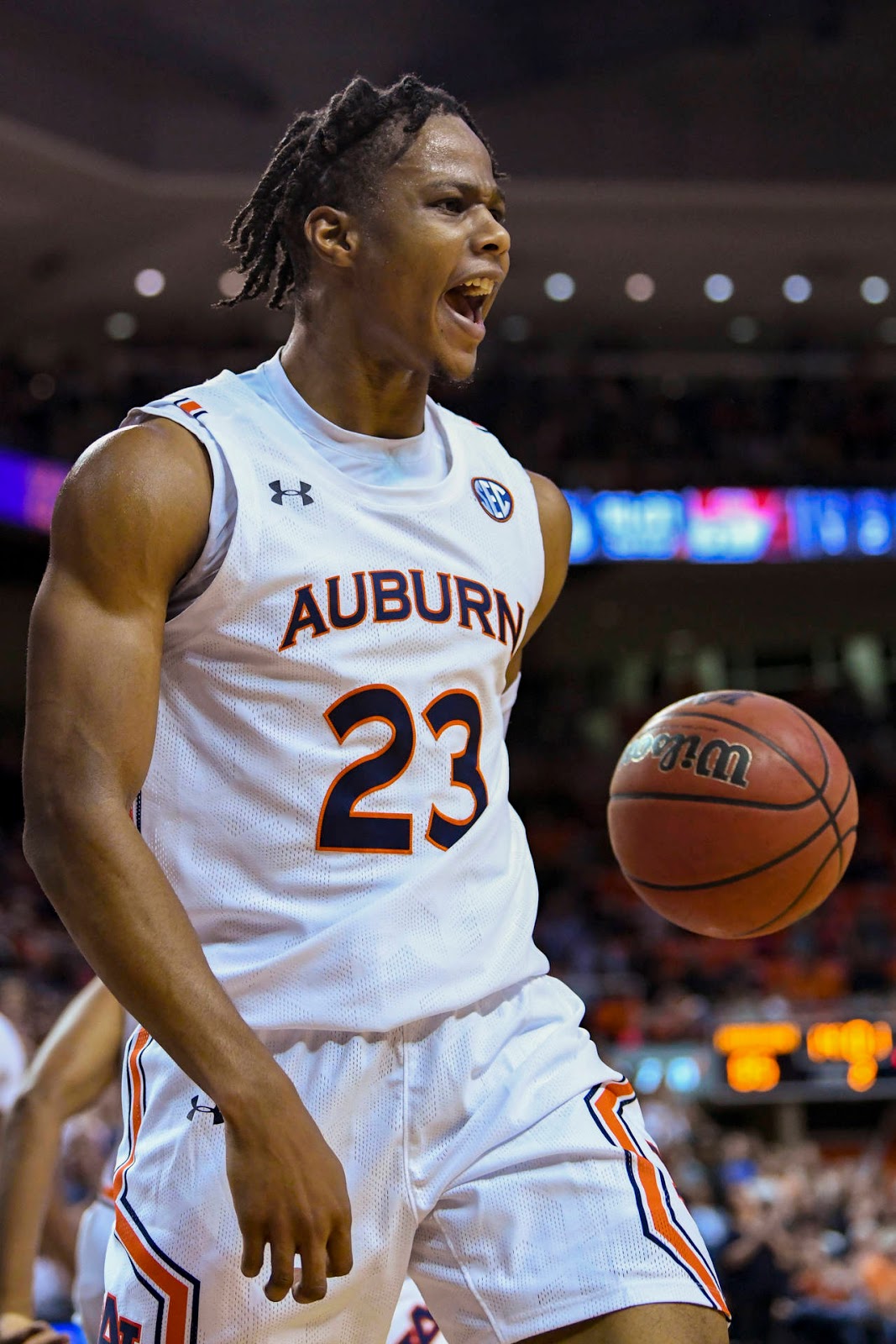
Isaac Okoro, G/F, Auburn
Atlanta's backcourt of Trae Young and Kevin Huerter is fun to watch when both are shooting the ball well, but neither are very good defenders. If the Hawks are hoping to take the next step, they'll need a better defensive team, particularly on the wings. Isaac Okoro is the perfect solution, and he's incredibly efficient too; he shot over 51 percent from the field in his lone season with Auburn.
5. Detroit Pistons
Obi Toppin, F, Dayton
The best player in college basketball this past season, Obi Toppin could go anywhere in the 2020 NBA Draft. He has the talent to legitimately be the first off the board, but it also wouldn't be shocking if he slips. Detroit needs all the help they can get offensively, and Toppin will inject some much-needed energy into the organization.
6. New York Knicks
Deni Avdija, F, Israel
While college basketball stars have been sidelined for months, Deni Avdija could see an opportunity to rise up boards as his team, Maccabi Tel Aviv, returns to action. NBA scouts are really intrigued by Avdija's smooth offensive game, and he's got ideal size for a forward at 6'9". Knicks fans might not necessarily love this selection, but Avdija is the type of guy that should be able to handle the pressure.
7. Chicago Bulls
Tyrese Haliburton, G, Iowa State
Although the Bulls drafted Coby White in the first round a year ago, Tyrese Haliburton may be too interesting to pass up here. The Iowa State product has great size (6'5"), can play and defend multiple positions, and passes the ball extremely well. He could even go higher on this board if not for the wrist injury suffered late this season that may make NBA teams wary.
8. Charlotte Hornets
Onyeka Okongwu, F/C, USC
Onyeka Okongwu didn't get a ton of attention playing on the West Coast this year, but he was extremely productive for USC and has a chance to be a Top 5 pick. He's an elite athlete that moves very well for his size, he has great touch around the rim, and he can stretch the floor a little. Charlotte desperately needs frontcourt help, making this is a no-brainer.
9. Washington Wizards
Killian Hayes, PG, France
There's a lot of variation in how NBA scouts and media people view Killian Hayes. Some think he may be the best player in this class, and there are some who don't think he's even lottery material. His passing ability and court vision are already at NBA levels, but he doesn't shoot the ball very well and consistency is a problem. Even so, the Wizards need a long-term solution at point guard, especially when you consider John Wall's injury history.
10. Phoenix Suns
Devin Vassell, G/F, Florida State
Florida State surprised a lot of people by winning the ACC this past season, and Devin Vassell was a major reason why. He led the Seminoles in scoring, and shot 42 percent from three, while showcasing a versatile offensive game. He makes a lot of sense for a Phoenix team looking to provide Devin Booker and DeAndre Ayton valuable complementary pieces.
11. San Antonio Spurs
Theo Maledon, PG, France
San Antonio is a franchise with a track record of success drafting international prospects, and they will be willing to take a chance on one here in Theo Maledon. The French point guard can play on-ball or off, and he's got significant offensive upside as a go-to scorer. He still needs to polish off parts of his game, but he's the type of prospect that can provide an immediate boost.
12. Sacramento Kings
Aaron Nesmith, G, Vanderbilt
There probably is not a better in the 2020 NBA Draft than Aaron Nesmith. Nesmith shot 52 percent from three with Vanderbilt this past season and while those numbers might be somewhat inflated because he missed time due to injury, his shot should carry over to the NBA. He'll help open up lanes for De'Aaron Fox and some of Sacramento's other playmakers.
13. New Orleans Pelicans
Cole Anthony, PG, UNC
Cole Anthony has the talent to go in the Top 10 of this Draft, but there are concerns with him. For one thing, he missed a significant portion of this past season with injury and even when he did play, he had a tendency to force shots and make mistakes. Anthony is a very confident player and he has a diverse offensive game, but he'll need to cut down on his mistakes. Playing under Alvin Gentry could help maximize his strengths, while limiting his issues.
14. Portland Trail Blazers
Precious Achiuwa, F/C, Memphis
Although Memphis was a disappointment this past season, Precious Achiuwa certainly was not. The highly touted newcomer averaged a double-double for the Tigers, while playing with great energy and attitude. Portland really could use more help in their frontcourt, and Achiuwa is worth the value in the late lottery.
15. Orlando Magic
Tyrese Maxey, G, Kentucky
Orlando has built a solid young core around Aaron Gordon, Nikola Vucevic and Jonathan Isaac, but their backcourt is far from settled. They could use some scoring punch there, and while he was awfully streaky at Kentucky, Tyrese Maxey would provide that. He had some dominant games with the Wildcats, but he has to shoot better than 29 percent from three if he is to succeed.
16. Minnesota Timberwolves
Patrick Williams, F, Florida State
Already adding La'Melo Ball earlier, Minnesota uses Brooklyn's pick to strengthen their frontline. Williams is still awfully raw, but he's a well-rounded forward with some versatility to his game. He'll need some time to learn and grow, but the upside is certainly there and he should fit well alongside KAT.
17. Boston Celtics
Saddiq Bey, F, Villanova
Don't be surprised if Saddiq Bey is a name that starts to shoot up boards the closer we get to the Draft. He had a breakout year for Villanova, and he's a late bloomer who is still growing into his body. As a sophomore in high school, Bey was 6'1", and he's grown at least seven inches since then. If he continues to grow and adjust, he could really evolve into something special.
18. Dallas Mavericks
R.J. Hampton, PG, New Zealand
R.J. Hampton was one of a growing number of high school kids deciding to forgo college and gain professional experience right away overseas. His numbers didn't overwhelm while playing for the New Zealand Breakers, but he still has a chance to go in the lottery based purely on potential. He has to grow as a shooter and distributor, but he's worth the risk here.
19. Milwaukee Bucks
Josh Green, G, Arizona
Josh Green offers a lot as a potential "3-and-D" player at the next level who can shoot the ball and play great defense. Those types of players are becoming hot commodities in the NBA, and it would make sense for Milwaukee to add Green. They know they aren't going to strike gold in the late first and find a new star to pair with Giannis, but finding players who can contribute is still possible.
20. Brooklyn Nets
Kira Lewis Jr., PG, Alabama
Brooklyn is still very hopeful that Kyrie Irving can be the star point guard they were hoping he would be when they signed him, but backcourt depth is never a problem. Kira Lewis was very good this past season for Alabama, scoring in a variety of ways and averaging five assists per game. He probably doesn't have superstar potential, but he can play in this league.
21. Denver Nuggets
Nico Mannion, PG, Arizona
Nico Mannion had an up-and-down '19-'20 season with Arizona, but he still has a lot of attributes that NBA teams covet. He's an excellent passer, a solid defender, and he's particularly effective in the open floor. Denver has a pretty deep roster right now but you can also use backup point guards, especially in the Western Conference.
22. Philadelphia Sixers
Jalen Smith, F/C, Maryland
Philadelphia might have one of the best big men in the NBA in Joel Embiid, but they lack quality depth on their frontline. If they do indeed draft at this selection, there should be a number of quality bigs available, but Jalen Smith seems to offer the most. He can run the floor, finish underneath, and he's a really good shooter for his position.
23. Miami Heat
Jahmi'us Ramsey, G, Texas Tech
Even though he was awfully streaky in his lone season in Lubbock, Jahmi'us Ramsey caught NBA teams attention with a versatile offensive game and a fearless attitude. It's unclear whether Ramsey will play the one or two when he makes the jump to the league, but he appears to be more effective on-ball. Miami could use some point guard help going forward, no matter whether Goran Dragic leaves over the off-season or not.
24. Utah Jazz
Daniel Oturu, F/C, Minnesota
I'm admittedly a little biased when it comes to Daniel Oturu, but I'm shocked he isn't getting more love when looking ahead to the 2020 NBA Draft. He had a breakout campaign for the Gophers and he's far from a limited, back-to-the-basket big. He can shoot, rebound and defend just as well as anybody in this class.
25. Oklahoma City Thunder
Tyrell Terry, G, Stanford
After averaging 14.6 PPG on 44 percent shooting (41 from three), Tyrell Terry has burst into first-round consideration. He's an effective scorer that has proven he can shoulder the offensive load, even if he is a little bit undersized for his position. Even so, he would be a nice addition to the backcourt that OKC is building with Shai Gilgeous-Alexander.
26. Boston Celtics
Isaiah Stewart, C, Washington
Isaiah Stewart may be a little bit small to play the five in the NBA at 6'9", but he makes up for it with an incredibly high motor and impressive rebounding prowess. Boston would love to add depth at the center position and there doesn't seem to be any risk to taking the Washington product here.
27. New York Knicks
Tre Jones, PG, Duke
The Knicks need to come out of the 2020 Draft with a point guard, and if they don't draft one earlier, taking one later on certainly makes sense. Tre Jones is never going to be a 20-point scorer every night in the NBA, but he's perhaps the best on-ball defender in this class, and he's a great leader. New York simply doesn't have enough of those types of guys on their roster.
28. Toronto Raptors
Reggie Perry, F, Mississippi State
Based purely off athleticism and upside, Reggie Perry might be a lottery pick. However, the Mississippi State product doesn't really project as a rim protector in the NBA, likely dropping him to either the bottom of the first round, or the second. Toronto has a track record for developing forwards into effective contributors, and Perry could be next.
29. Boston Celtics
Alexsej Pokusevski, F, Serbia
With three first-rounders in this upcoming class, it wouldn't be shocking to see Boston use on an international "stash" guy like Pokusevski. The Serbian has serious floor-stretching potential, which is always an attribute NBA teams are looking for. He also offers significant defensive upside, with a 7'3" wingspan and 9'1" standing reach.
30. Los Angeles Lakers
Devon Dotson, PG, Kansas
As the leader of the nation's No. 1 team, Devon Dotson could have become a household name in the NCAA Tournament if it hadn't been cancelled. He obviously won't get that opportunity, but he really emerged as a terrific floor leader with the Jayhawks and he's a real winner. He would add much-needed depth to this Lakers' backcourt.

Monday, July 6, 2020

College Football Preview 2020: 24. Memphis Tigers

24. Memphis Tigers

Mike Norvell may be gone, but he leaves behind a foundation that can once again compete for a New Year's Six Bowl


Brady White
Offense: Memphis has finished in the Top 15 nationally in scoring offense the last five years, and the ingredients remain for a successful 2020.

Quarterback Brady White is the most crucial returnee, coming back for his senior season with the Tigers. White began his career under Norvell at Arizona State before making the trek to the AAC, and there was some question that he would follow his long-time coach to Tallahassee. Instead, he'll enter 2020 as the best quarterback in the conference, and will have a legitimate shot at becoming the school's all-time passing leader. He does have to cut down on interceptions, as he had 11 last fall and some of them came at crucial moments.

White also has the luxury of having his favorite target, veteran Damonte Coxie, back in the fold. Coxie contemplated going pro, but seems to have something to prove entering the new year. He is a bonafide NFL prospect, with a well-built frame and top-tier athleticism. Coxie averaged nearly 17 yards per catch a year ago, and I still expect Memphis to attack downfield with him often. Tight end Joey Magnifico is a notable loss, as defenses were forced to focus on him underneath. It will be interesting to see whether anybody is able to make up for his absence at the position. Not having a spring certainly hurt the chances of a youngster making the leap. Beyond Coxie, wide out Calvin Austin has shown flashes, and could see an uptick in action.

Norvell loved to throw the ball around and attack opposing defenses and while he may be gone, that philosophy remains intact under offensive coordinator Kevin Johns. However, the Tigers shouldn't shy away from pounding the rock this upcoming fall, as they have a special talent in Kenneth Gainwell. Gainwell redshirted in '19 before breaking on to the scene in the backfield, eclipsing 2,000 all-purpose yards. He will certainly get his opportunities running the ball, but his ability to catch out of the backfield adds another element to this offense. Gainwell will eat up the bulk of carries, but keep an eye on newcomer Asa Martin. Martin is on his third school in the collegiate ranks, beginning at Auburn before a quick pit stop at Miami (where he never suited up), and eventually coming to Memphis. Martin is a former four-star prospect coming out of high school and he's the type of talent the Tigers simply didn't get a half-decade ago. He can also catch the ball out of the backfield, which should help him see opportunities.

This offensive line will almost certainly be overshadowed by the playmakers at the skill positions, but three starters return to the unit and a healthy amount of experience. The left side is particularly strong, with tackle Obinna Eze back for his junior season, along with guard Dylan Parham, who has made 28 straight starts. The center spot may be a concern with Dustin Woodard off to the NFL, but sophomore Isaac Ellis appears to be the favorite.

There are few teams in the entire country that can match what Memphis brings back at the skill positions. They have a veteran quarterback ready to lead the way, a budding superstar at running back, and a proven top target on the perimeter. It seems almost certain they'll once again feature as a Top 15 offense, and they could be even be better than the 2019 edition.

Defense: The prognostication for the defense is not as cheery as the offense. There are some very notable faces gone, including Austin Hall, Bryce Huff, and Chris Claybrooks. Hall is going to be the loss they feel the most. He led the team in tackles during the 2019 campaign, and helped out in a variety of ways. He was the only Memphis Tiger defender to score a touchdown last fall.

Huff was the team's top pass rusher (six sacks), but the outlook for the defensive line still appears fine. Senior Joseph Dorceus is a very important returnee, as a chaotic edge rusher who really grew into his own last year. He's a former walk-on, but his production last fall was no joke, as he totaled 14.5 TFL and five sacks. Memphis coaches are hoping he can get even better with more time under his belt, and rumor is he's added major muscle during the off-season. In the middle, the Tigers also bring back notable experience in O'Bryan Goodson and Morris Joseph. Goodson played a hefty amount of snaps a year ago and showed he was a real technician in run support, with seven tackles for loss. Joseph is a former junior college transfer who acclimated well to the defense in 2019. He had 27 tackles and two sacks as a reserve, but could start this fall in this 4-3 look.

The Tigers linebacker corps was another unit hit hard by the impact of no spring practice. This group has a lot of growing up to do, but there's upside as well. Xavier Cullens is a proven playmaker who was third on Memphis in tackles last fall. He'll need a new playing mate with the absence of Hall. Keith Brown could be an interesting player to watch as a former JUCO transfer who missed most of last season due to injury. The hope is that he's fresh for the fall, and he has the potential to be a really impactful player. Another former transfer, Cincir Evans, could also factor into the linebacker rotation. He arrived from Coastal Carolina in the spring, but obviously things have changed. His eligibility status is uncertain as we look ahead to 2020.

Memphis posted the No. 26 pass defense in the country during 2019, a fairly underrated element of this team a year ago. Sanchez Blake Jr. has the chance to become an All-AAC player as a dynamic strong safety who had 69 tackles and two interceptions last season. He can play close to the line really well for his position, and I think he'll continue to grow in coverage. That could be important for a Tiger team that is hurting at corner. Veteran Jacobi Francis had eight pass deflections in 2019, but may need an adjustment period becoming the No. 1 corner. La'Andre Thomas is the other veteran back in the fold, locking down the free safety position. Thomas was the only Memphis defender to score a touchdown last year, taking an interception 33 yards to the house. Perhaps another late newcomer in the spring or fall can get snaps, but you get the feeling this is going to be a fairly experienced group. They might not be as deep as they were a year ago, but could still figure to be among the conference's elite.

Mike MacIntrye arrives as the new defensive coordinator, looking to keep the momentum going from a strong showing in '19. MacIntrye was formerly the Colorado head coach before guiding the Ole Miss defense last year.

Special Teams: Placekicker Riley Patterson should be active in 2020, and he's proven he can consistently knock in field goals. Patterson is 26 for 36 in his career, including going 23 of 25 in 2019. Don't be surprised if he gets some attention on the Lou Groza Award watchlist for nation's top kicker. The return game could be explosive, but it's not a very well-established group at this point.

Bottom Line: Memphis has been the envy of most of the Group of Five this past half-decade, sending their last two head coaches to ACC powers. Their 12-2 record in 2019 was all about perfect timing and impactful veterans, but not everybody moves on. It's hard to overstate the importance of bringing back Brady White. He'll bridge the gap between Norvell and the new coaching staff, as will Damonte Coxie and Kenneth Gainwell. It's hard to imagine that offense not producing, even some expected changes under the leadership of Ryan Silverfield. But, Silverfield looks like's ready to go; he coached Memphis in the bowl game and even though they lost, he seemed to take command of the team. I don't see a dropoff this year, and think they could still be considered the American Athletic favorite, even though I rank Cincinnati higher. It wouldn't be surprising to see them in their fourth-straight conference championship game and perhaps even staying in New Year's Six Bowl consideration.

Recruiting Breakdown
The Tigers bring in one of the better classes in Group of Five, even breaking in a new coaching staff. They reeled in a number of junior college players who enrolled during the spring. Kundarris Taylor is one of the highest-rated JUCO players in the entire country, and he's a one-time Oklahoma commit. Rhett Weidenbacher is not one the top players in the Class, but I wonder if he'll be able to make an immediate impact at tight end. He comes from a respected JUCO program in Butler Community College, and earned a three-star billing. We'll see how this recruiting class opens up, assuming we get some sort of fall practice in late summer. There were eight enrollees for the spring but a lot more slated to come in for fall camp, including three-star dual threat Keilan Brown. He obviously won't supplant Brady White at the quarterback position, but don't be surprised if he makes an impact in the future.

Team Projections
Projected Record: 9-4 (6-2 AAC, Lose in American Athletic Championship Game)
Offensive MVP: QB Brady White
Defensive MVP: S Sanchez Blake Jr.
Breakout Player of the Year: WR Calvin Austin
Impact Freshman: TE Rhett Weidenbacher (JUCO)

Five-Year Trend

As of publishing, we still do not know the effect that COVID-19 will have on the 2020 college football season beyond cancelled spring practice. It seems highly likely that there will be no fans or a shortened season, at the very least. This preview is operating under the optimistic assumption there will be a season, and even if it is delayed, teams will be able to get a full, 12-game schedule in. 

Wednesday, July 1, 2020

College Football Preview 2020: 25. Louisville Cardinals

25. Louisville Cardinals

The surprising success of Scott Satterfield's first season could lead to an even greater encore in 2020

Tutu Atwell

Offense: Louisville's 2018 offense was one of the worst in Power Five football, averaging under 20 points per game. Those numbers changed rapidly under the leadership of new head coach Scott Satterfield and his staff, as the Cardinals improved to 33.1 PPG (31st nationally). With all the talent back in Louisville, it wouldn't be surprising to see that number again make a jump.

Jawon Pass entered last season as the presumed starter, but he was quickly overtaken by Micale Cunningham (previously Malik). Cunningham was always a great runner, but his passing numbers were surprisingly strong in 2019. He finished with 2,061 yards and 22 touchdowns on the year, while limiting his turnovers. You would still like to see Cunningham become more confident throwing down the field, but he's a smart decision-maker that has proven he can move the chains. He ran for 482 yards a year ago, and teams also have to always respect his legs. Pass returns as the presumed backup, but it will be interesting to see if he decides to transfer.

The biggest surprise on the Cardinals' offense last season was the emergence of Javian Hawkins at tailback. Hawkins ended up rushing for 1,525 yards and nine scores, taking advantage of an offense that put a much larger emphasis on the run than the previous unit under Bobby Petrino. He was truly dominant at moments, including a 233-yard performance against Syracuse in late November. Hawkins will enter 2020 as one of the ACC's best, and one of the more underrated playmakers in the entire country. Joining him will be veteran Hassan Hall, set to begin his junior year as a change-of-pace option. Hall isn't the home run hitter that Hawkins is, but he has a little more size and power to him, eclipsing 500 yards in '19. That 1-2 punch will be the fuel to this Louisville offense, even if Cunningham takes strides as a passer. 

For all the success that this offense and rushing attack had last fall, the offensive line was surprisingly terrible. Beyond Mekhi Becton, it was terribly inconsistent and lacked much punch in either run or pass blocking. The Cardinals allowed the most tackles for loss in the nation last year, and that was with Becton in the fold. Now that Becton is off to the NFL, some other pieces are going to have to step up. Seniors Cole Bentley and Ronnie Bell have played a lot of snaps, but are still looking to develop more consistency. At left tackle, the favorite to replace Becton is junior Adonis Boone, who has upside but is certainly unproven.

With their talented backfield trio in place, it's easy to overlook the playmakers the Cardinals can also feature on the outside. 5'9" dynamo Tutu Atwell was criminally under-utilized by the old coaching staff, but he really broke out last fall. Atwell averaged 18.4 yards per reception a season ago, showcasing a blend of playmaking abilities. He can hit you over the top deep, open things up off screens, or get to the perimeter and make things happen on sweep plays. Atwell even threw a touchdown pass last year, and it will be fascinating to see all the different ways Louisville uses him. He's one of my favorite players in the country looking ahead to 2020. The Cards can also feature two traditional pass-catchers in tight end Marshon Ford and receiver Dez Fitzpatrick. Fitzpatrick has been very reliable his first three years on the team, and is coming off a 635-yard 2019. Meanwhile, Ford really flashed something special, catching seven touchdown passes in '19. With teams forced to focus so much on Atwell, these Cardinal receivers are going to continue getting opportunities.

Outside of Becton, every crucial piece to this Louisville offense remains in the fold for 2020. This is a real opportunity for these guys to showcase what they can do, and I'm excited to see what new looks Satterfield and staff cook up. If the O-Line can at least be serviceable, I don't think it's crazy to think the Cardinals can have the second best offense in the ACC, behind only Clemson. They have the versatility and playmaking to do it, now it's just about putting that product out on the field.

Defense: Bryan Brown is known as a high-energy guy who followed Satterfield over from Applachian State to become Louisville's defensive coordinator. He needed all that energy to turn around a defense that had one of the worst statistical seasons in Louisville football history. There were certainly some growing pains for Brown and this defense in 2019, but there is hope on the horizon.

Louisville's rush defense was still one of the worst in the ACC last fall, and changing that relies on the defensive line making some improvements. It's a group that has potential, but will be losing one of it's most important pieces in the form of G.G. Robinson, who graduated. Robinson was second on the team in sacks a year ago with four, and he was a real leader for the group. His spot on the interior is likely to be taken by veteran Jared Goldwire, who has proven he can contribute. He had 22 tackles in a rotational role last season, and four tackles for loss. The Cardinals would really like to see one of their defensive ends have a breakout campaign, and there are several possibilities on who that might be. Junior Malik Clark has a real nose for the football, and will compete for steps along with Dayne Kinniard and Tabarius Peterson.

No matter what happens with the D-Line, the Cardinals should feel good about the returning talent in the linebacker corps. It's a group that is a little bit undersized by ACC standards, but that allows them to do things a little bit differently than other defenses. Three of the top four tackles from last season reside in this unit, including inside linebackers C.J. Avery and Dorian Etheridge, as well as outside 'backer Rodjay Burns. I'm a huge fan of Burns, a former Ohio State cornerback who eventually made the switch to linebacker. He bulked up to fit the position more naturally, but still offers a lot of speed and explosiveness for the position. Burns is a disruptive presence (11 tackles for loss) that can also use his natural coverage skills to make things happen. Avery and Etheridge are also pretty versatile for their position, both proving themselves in run support and showing coverage abilities. Avery had six pass deflections, while Etheridge contributed five. Keep an eye on outside linebacker Monty Montgomery as well. The former JUCO transfer might not start, but he led the team in sacks a season ago.

There is progress to made in the back-end as well, although the Cardinals can feel good about the direction the unit is heading in. Louisville's pass defense took some major leaps in 2019, but still struggled with consistency and creating turnovers; they had just seven interceptions on the year. With a ton of depth and experience back, this could be one of the most improved units in the ACC. The likely starting cornerbacks are juniors Chandler Jones and Anthony Johnson. The pair of them have appeared in 48 total games during their respective UL tenures, with Jones having the talent to be an All-Conference player. He was sixth on the team with 50 tackles in 2019, and he also notched ten pass deflections. Also returning are a pair of safeties in Isaiah Hayes and Jack Fagot. Hayes began his career at Arizona before making the trek to the ACC, and he appeared able to acclimate to the defense well. Fagot could be in store for a breakout 2020 campaign; the rangy defender picked off Trevor Lawrence last fall, and can make plays all over the field. He's waited his turn in this UL secondary, but should start this season.

The defense was a complete mess when Scott Satterfield and this staff took over, and it will take more than just a year or two to completely turn things around. However, the group is making progress at nearly every level, and the trajectory for 2020 is looking up. There is experience throughout the defense, and significantly more depth than they had last fall. Now, if they can just find a way to create more turnovers, this unit could continue to climb up the totem pole in the ACC.

Special Teams: The graduation of placekicker Blanton Creque leaves Ryan Chalifoux as the favorite at the position for this next fall. He attempted three field goals a year ago, making one, while also going 22-25 on extra points. Punter is also a concern, as Mason King departs after averaging nearly 43 yards per punt in '19. The good news is that the return game has a lot of potential, but there is still work to be done for ST Coordinator Stu Holt.

Bottom Line: The reality of the ACC Atlantic right now is that nobody can match Clemson, but Louisville has the tools to at least come close. Their collection of offensive playmakers is second in the conference only to the Tigers, and the defense should continue to take the steps it needs to take in 2020. The big concern for Satterfield is not experiencing the "sophomore slump"; plenty of head coaches have had smashing debuts at their respective schools before things fell a little flat in Year Two. I don't see that happening here; this program has a clear upward trajectory bend, and the schedule seems to set up nicely for them. Outside of a date with Clemson, their first month-and-a-half should be a relative breeze, which should get the momentum they need to finish off a back-half that includes dates with Notre Dame and Kentucky. I don't think the Cardinals are going to overtake Clemson, but 9-10 wins seems entirely doable with the talent that is returning in the 'Ville.

Team Projections
Projected Record: 8-4 (5-3 ACC)
Offensive MVP: WR Tutu Atwell
Defensive MVP: LB Rodjay Burns
Breakout Player of the Year: CB Chandler Jones
Impact Freshman: LB Kameron Wilson

Recruiting Breakdown
The Cardinals break in the No. 42 Class in the country, according to 247Sports. Satterfield and his staff have clearly put an emphasis on getting back into Georgia and Florida and competing for a wide variety of prospects. Three-star outside linebacker Kameron Wilson already looks like a college football player, but he could be heading for a redshirt with the depth Louisville has returning at the position. The same could be said for fellow three-star Lovie Jenkins, a safety out of Ocoee, Florida. Jenkins was once a Tennessee commit, before flipping to the Cards in December. In terms of immediate impact, look no further than a pair of junior college transfers in Yaya Diaby and Trevor Reid, both out of Georgia Military College. Diaby is a guy that really impressed me when I saw his tape; he's a fearless competitor who never quits on the play. The strong-side defensive end could see immediate snaps for a Louisville pass rush that could use a bump.


Five-Year Trend


* As of publishing, we still do not know the effect that COVID-19 will have on the 2020 college football season beyond cancelled spring practice. It seems highly likely that there will be no fans or a shortened season, at the very least. This preview is operating under the optimistic assumption there will be a season, and even if it is delayed, teams will be able to get a full, 12-game schedule in. 

Wednesday, June 24, 2020

College Football Coach Rankings 2020: SEC

My "Coach Rankings 2020" aims to compile a definitive list of the best coaches in the sport in each Power Five league. To do this, I tried to weigh the current trajectory of the coach's program, past success at current school and former schools, as well as recruiting impact. Obviously this list is highly subjective, and there should be plenty of spirited debate about which order these coaches fall. Our final Power Five league is the SEC, a league filled with accomplished coaches and fantastic coaching personalities.

1. Nick Saban, Alabama
Nick Saban, Alabama

Record at Alabama: 152-23
Record Overall: 243-65-1
Notable Accomplishments: 6 National Titles, 9 Conference Titles, 4-Time SEC Coach of the Year (2003, 2008, 2009, 2016)

Even as the Crimson Tide embark on their first season without a Playoff appearance in the Playoff era, it's hard to make any argument that Nick Saban is not the top coach in the SEC. Saban is the winningest active head coach in the country, and he supplements that fact with six National Titles, nine conference titles (8 in the SEC), and 12 SEC West Division Titles. That's truly a staggering resume, particularly when you consider Saban has had all that success in the nation's toughest football conference, with 129 other FBS teams all trying to take down the Tide. Even if you aren't an Alabama fan, you have to appreciate the unprecedented success they've had the past decade-plus. Being able to out-recruit opposing programs, develop all that talent, and then go out and win consistently as they have is easier said than done. I don't believe this train will stop rolling anytime soon; Saban and the Tide should be make in the CFB Playoff in 2020.

2. Kirby Smart, Georgia
Record at Georgia: 44-12
Record Overall: 44-12
Notable Accomplishments: One Conference Title, 3 SEC East Division Titles, SEC Coach of the Year (2017), Broyles Award

Nick Saban's long-time assistant has yet to take down the mighty head man in Tuscaloosca, but Kirby Smart has done just about everything else in four seasons you could ask. After a solid 8-5 debut campaign, the Bulldogs have lost a total of seven games over their next three seasons, winning the SEC East each year. In addition to the success on the field, Kirby and his staff have been absolutely dominant on the recruiting trail, consistently reeling in Top 3 classes, and taking home the top class overall for 2020. That amount of talent coming into the program has continued to raise the Bulldogs' national profile, but it's also put plenty of pressure on Kirby. Georgia fans haven't seen the program take home a National Title since 1980, a fact they're consistently reminded of from opposing fan bases. This program has all the talent do so, now it's up to Smart to earn this ranking and finally deliver one back to Athens.

3. Ed Orgeron, LSU
Record at LSU: 40-9
Record Overall: 56-36
Notable Accomplishments: One National Title, One Conference Title, SEC Coach of the Year (2019)

Ed Orgeron is the perfect example of how a second chance in coaching can make all the difference. His first stint as head coach was at Ole Miss and it went pretty disastrous, as the Rebels went 10-25 in three years under his leadership, including a putrid 3-21 mark in the conference. Orgeron bounced around before making waves as USC's interim head coach when Lane Kiffin was fired mid-season in 2013. Despite a 6-2 record as the interim, essentially saving a lost season, Orgeron was not considered for the full-time gig, ending up at LSU as their D-Line coach. When he got the opportunity as an interim once again, he didn't let it slip away, earning the full-time gig in his home state. There was some shaky early moments for "Coach O", but his last two seasons have shown just how good of a coach he is. He was able to bring in a game-changer at QB in Joe Burrow, and then made the right decisions on offense to unleash Burrow, equating to 25 wins in the past two years, and a magical 2019 that included a National Title. The third act of Orgeron's coaching career will be all about keeping the momentum going. Can he provide a memorable encore without Burrow and a number of other important pieces? Doing so could further cement him as one of the best coaches in not just the SEC, but the entire nation.

4. Dan Mullen, Florida
Record at Florida: 21-5
Record Overall: 90-51
Notable Accomplishments: SEC Coach of the Year (2014), 10 Bowl Game Appearances

Dan Mullen might not have as many big games as the top three guys in these rankings, but his work done at both Mississippi State and Florida prove just how good of a coach he is. When he first arrived in Starkville, he took over a Bulldog program that had almost no football tradition, and turned them into a consistent postseason player while playing in one of the sport's toughest divisions. In nearly a decade with Mississippi State, he missed a bowl game just once, and he finished ranked in the Top 25 on three separate occasions. His jump to Florida wasn't much of a surprise, as he was a former Gator offensive coordinator but what has been surprising is just how quickly he's adjusted to his role in Gainesville. He helped UF jump from four wins to ten in his debut campaign, following that up with an 11-win 2019, capped off by a second straight New Year's Six bowl. His offensive prowess has been on full display in his two seasons with the Gators, as one of the country's worst offenses has become one of the better in the league. What can we expect in Year 3 of the Mullen tenure? If the Gators can overtake Georgia in the division, it will tell us a lot more about just how high of a ceiling he has.

5. Jimbo Fisher, Texas A&M
Record at Texas A&M: 17-9
Record Overall: 100-32
Notable Accomplishments: One National Title, 3 Conference Titles, One Playoff Appearance

Replacing a legendary head coach like Bobby Bowden is a tall task for any head coach, and Jimbo Fisher had to do just that when he took over at Florida State in 2010. Fisher certainly did a good job in Tallahassee, returning them to glory on a national level, and winning a National Championship in 2013, still one of the most dominant teams in school history. His success with the Seminoles led A&M to drop 7.5 million dollars annually to bring him in to replace Kevin Sumlin and while the jury's still out, Fisher's first two years in College Station have been promising. He's done an effective job getting top-tier talent to come to A&M, and a 17-9 record in the SEC is nothing to scoff at. Much like others on this list, Jimbo enters a crucial Year 3 with lofty expectations. Some consider the Aggies as Playoff contenders going into 2020, and possible challengers to LSU and Alabama inside the division. If A&M is unable to live up to those incredibly high standards, it could leave some fans wondering if Jimbo's massive price tag is going to be worth it in the long run.

6. Gus Malzahn, Auburn
Record at Auburn: 62-31
Record Overall: 71-34
Notable Accomplishments: 2 Conference Titles, 2 SEC West Division Titles, SEC Coach of the Year (2013)

Since a magical 2013 that saw Auburn go all the way to the BCS National Championship Game, Gus Malzahn has been a constant name on college football hot seat lists. His Auburn teams have routinely fluctuated between good and disappointing on a yearly basis, leaving the long-time head coach as a fascinating figure in the landscape of the SEC. To be fair to Malzahn, his numbers with the Tigers are pretty solid when you consider the division they play in, and he has any victories over Iron Bowl rival Alabama as the rest of the SEC does against the Tide since he took over (three). However, Auburn's lack of consistency makes it difficult to rate Gus any higher on this list. He's proven his worth as an offensive mind who can field some really fun groups, and Malzahn has also done well on the recruiting trail. But, until we're able to see sustained success from him, he fits into this conference as a good, but not great, head coach. Perhaps having a young quarterback to build around in Bo Nix may give Gus what he needs to finally reign atop the SEC once again.

7. Mark Stoops, Kentucky
Record at Kentucky: 44-44
Record Overall: 44-44
Notable Accomplishments: Four Bowl Appearances, SEC Coach of the Year (2018)

Give Kentucky and Mark Stoops both credit for their partnership since 2013. The school stuck with the head coach through difficult times early on in his tenure, including a 2-10 debut campaign, and it has worked out, as Stoops has Kentucky playing the best football they have in years. The Wildcats have now gone to four consecutive bowl games, and they've won two straight. Included in that bowl streak was the 2018 team, which showed just how much Stoops had elevated the quality of the program. That team went 10-3 on the year, won a New Year's Six Bowl, and came incredibly close to taking home the SEC East Division crown. To follow that up with an 8-5 record is actually pretty impressive; it showed this UK program was not a one-hit wonder, and this team won eight games after their starting QB, Terry Wilson, went down for the year in the season's first month and converted wide out Lynn Bowden was playing the position. It's probably unreasonable to think Stoops can get Kentucky to SEC Championship levels in the current iteration of the league, but from where he started, there is little question he's done a terrific job. Not bad for a guy who had never been a head coach before arriving in Lexington.

8. Mike Leach, Mississippi State
Record at Mississippi State: 0-0
Record Overall: 139-90
Notable Accomplishments: 15 Bowl Appearances, 2-Time Pac-12 Coach of the Year (2015, 2018)

Mike Leach is certainly a unique character, and he's won at some of college's most unique outposts. In a decade at Texas Tech, a school without much of a tradition on the gridiron, Leach averaged over eight wins per season and finished ranked fifth times. After a two-year hiatus from the sport, Leach was brought on at Washington State, another school with little to no winning tradition on the football field. After some initial bumps, Leach was rolling in Pullman, winning eight or more games in four of the last five seasons. Now it's time to gear up for his latest destination: Starkville, Mississippi. Mississippi State is a program that has upgraded their talent level in a big way over the past two decades, and Dan Mullen proved you could win there. But, getting elite talent to come to Starkville will always be a tough task, and Leach has never been known as a great recruiter. He is going to need different athletes in the SEC than the ones he brought in during his time at TTU and WSU. It's going to be really interesting to see if his patented "Air Raid" scheme is able to survive in the physical SEC. It may or may not but either way, it's going to be awfully entertaining.

9. Lane Kiffin, Ole Miss
Record at Ole Miss: 0-0
Record Overall: 61-34
Notable Accomplishments: 2 Conference Titles

Lane Kiffin made history in 2007 when, at age 31, he became the youngest head coach in modern NFL history. Since then, Kiffin's career has truly been a fascinating and entertaining watch, with some success, but also notable failures. He had an epic, short-lived season as head coach of Tennessee before ditching out West to take over at USC, where the Trojans were crippled by NCAA violations, but still competitive. After eventually being fired at 'SC, Kiffin again made a short stop at one of the sport's blue bloods, this time as offensive coordinator at Alabama. To give Lane credit, aside from constant clashes with head coach Nick Saban, he did a good job leading the Tide offense. From 2014-2016, he helped 'Bama switch from a pro-style attack into a modern, spread look that allowed the Tide to compete with the rest of the sport's elite. From Alabama, Kiffin has been able to further improve his coaching stock by leading Florida Atlantic to a pair of C-USA Titles. The Owls were an extremely forgettable program before his arrival, but they would go 18-6 in the conference during his time there. The next stop in the Lane Train is now in Oxford, Mississippi, where he hopes to energize a program that was extremely underwhelming under former coach Matt Luke. Will he win there? You can never predict how a Lane Kiffin-led team will finish, but he has proven his coaching chops these past few years at FAU. Obviously, the SEC West is quite the jump up from the C-USA, but I wouldn't be shocked if it worked.

10. Jeremy Pruitt, Tennessee
Record at Tennessee: 13-12
Record Overall: 13-12
Notable Accomplishments: 5 National Championships as Assistant

A longtime assistant, Jeremy Pruitt finally made the jump to head coaching at one of the sport's most difficult venues. The Tennessee job is not tough because of its resources or potential to win, but because of how high the expectations are for a program that hasn't won consistently in a long time. Tennessee fans can often turn on head coaches rather quick, and after a poor start to the 2019 campaign, it looked like Vol fans were about ready to ditch the second-year coach. Give Pruitt credit, he righted the ship and by the end of the fall, UT was playing tremendous football. They ended 2019 8-5, capped off from a come-from-behind bowl victory over Indiana. To add to their recent momentum, the 2021 recruiting class is currently ranked as one of the best in the entire nation. That's going to help contribute to what will be lofty expectations once again in Knoxville. This isn't the first time people have begun to consider Tennessee returning to SEC East Title contention, but that adds a lot of pressure on Pruitt. If he's able to weather the storm and keep the Volunteers in the hunt for a division title, his stock should continue to rise.

11. Will Muschamp, South Carolina
Record at South Carolina: 26-25
Record Overall: 54-46
Notable Accomplishments: One SEC East Division Title, 6 Bowl Appearances

On a surface level, Will Muschamp's career numbers really are nothing to feel bad about. 54-46 in Power Five football is respectable, and even a 26-25 mark at South Carolina seems fine when you consider the state of the program pre-Steve Spurrier. However, a closer look helps you learn why Muschamp is floundering near the bottom of the league in these rankings. Aside from one 11-2 campaign in 2012, Muschamp has never achieved double-digit wins. In fact, he has reached the pedestal of eight wins just twice in nearly a decade of coaching. His numbers against big-time college football opponents aren't very encouraging either; he's 5-15 all-time against the Top 10, and 7-25 against Top 25 foes. Those numbers get worse when you consider half his coaching career was spent at Florida, a blue blood of the sport that has massive school support and regularly brings in elite football talent. Muschamp will now enter Year 5 at South Carolina on the hot seat, following a 4-8 record in 2019 and fourth place finish in the division. To be fair, he has shown some progress in his time at South Carolina, but the Gamecocks still have been rather mediocre under his leadership. Perhaps that is just where Muschamp sits as a head coach in college football.

12. Eli Drinkwitz, Missouri
Record at Missouri: 0-0
Record Overall: 12-1
Notable Accomplishments: 1 Conference Title

Eli Drinkwitz has been a rising name in the coaching profession since he was the Quality Control coach on the 2010 National Championship Auburn team. After floating around as offensive coordinator at a few programs, Drinkwitz was hired by Appalachian State to replace Scott Satterfield and his lone season in Boone, North Carolina was a great one. The Mountaineers went 12-1 under Drinkwitz, winning the Sun Belt and coming extremely close to a New Year's Six Bowl. Drinkwitz was able to parlay that success into an SEC job at Missouri, a school with significant upside but one that languished under former coach Barry Odom. Drinkwitz certainly enters with a lot of momentum, but there's a reason he is ranked so low on this list. First off, we just haven't seen enough of him as a head coach. Last year was impressive, but Appalachian State won a lot of close games, and keeping a program running over the long run is quite different than a one-year hit. Secondly, App. State was already in great position when he got there. There was no rebuild job for Drinkwitz, as he inherited a roster equipped to dominate the Sun Belt. He doesn't quite get that at Missouri, where he'll be breaking in a new QB and plenty of new pieces. Those two factors alone give me pause before jumping on the Drinkwitz hype train, as he'll have to wait and see what he does in Columbia. He has injected some new energy into a Mizzou program that needed it, but will the wins come too?

13. Derek Mason, Vanderbilt
Record at Vanderbilt: 27-47
Record Overall: 27-47
Notable Accomplishments: 2 Bowl Appearances

Replacing a coach like James Franklin is a tall task for any coach, but it's particularly hard at a place like Vanderbilt. In that sense, it's not surprising that Derek Mason has struggled to live up to his predecessor, who orchestrated a pair of nine-win campaigns in 2012 and 2013. Mason has had some success at Vanderbilt, who has gone to two bowls under his leadership, and has generally operated at around .500 level. At a school like Vandy, which has a long tradition of losing, that isn't something to completely overlook. However, fresh off a 3-9 2019 campaign, things are getting hot for Mason in Nashville. It's easier to look past some of his successes and focus in on his failures, which are going to happen at a place like Vanderbilt. Under Mason, the Commodores have finished last or second-to-last in the SEC East every single season except for one (2015, when they went 4-8 overall). That's more excusable in the SEC West, but not in an East Division that has routinely been the the weaker division this decade. There is still some hope that Mason, a defensive-minded coach who helped oversee Stanford's turn to perennial Pac-12 power, can turn things around, but the clock is certainly ticking.

14. Sam Pittman, Arkansas
Record at Arkansas: 0-0
Record Overall: 0-0
Notable Accomplishments: None

Nearly Sam Pittman's entire career he has been an offensive line coach, but he's finally making the jump to head coach in 2020 with Arkansas. Pittman won't have it easy; not only does he play in arguably college football's toughest division, he's taking over a program that has gone 4-20 the past two seasons, and has won just one SEC game since 2017. Much like Drinkwitz at Missouri, Pittman does deserve credit for the energy he has injected into a program that has a complete and utter disaster under former head man Chad Morris. But, that enthusiasm and energy is a lot more endearing when there are no results to look at. If Pittman struggles early on, it could really hurt his chances to truly "rebuild" things in Fayetteville. I do give the Razorbacks credit for going with Pittman, who was an outside-the-box hire, even as he was getting recognition for his offensive line work. If he is able to recruit and develop talent, in a way Bert Bielema and Morris were unable to, Arkansas could really be a sleeping giant.

Tuesday, June 16, 2020

College Football Coach Rankings 2020: Pac-12

David Shaw, Stanford
My "Coach Rankings 2020" aims to compile a definitive list of the best coaches in the sport in each Power Five league. To do this, I tried to weigh the current trajectory of the coach's program, past success at current school and former schools, as well as recruiting impact. Obviously this list is highly subjective, and there should be plenty of spirited debate about which order these coaches fall. Next up is the Pac-12, another league that has seen a lot of turnover at the head coaching position in the last few years.

1. Kyle Whittingham, Utah
Record at Utah: 131-64
Record Overall: 131-64
Notable Accomplishments: 3 Pac-12 South Division Titles, Two BCS Bowl Victories, One Conference Title

It's not often a program makes two home run hires in a row, but Utah did just that when they hired Kyle Whittingham after Urban Meyer left for Florida. Whittingham has been with the Utes since he took over as D-Line coach in 1994, rising up the ranks to head coach. Since 2005, he was overseen the program rise from "BCS buster" to a respectable, consistent Power Five winner. The 2008 campaign, when Utah went 13-0, will live in the school's history forever, but Whittingham has shown he can lead the Utes to other highs, including three division titles in the Pac-12 South. They've missed the postseason twice since '05, a testament to Whittingham's ability to lead any type of roster to success. At a place like Utah, he isn't ever going to bring in elite-level high school talent, but Whittingham has sent a ton of players to the NFL, especially on the defensive side of the ball. After placing the Utes in the Playoff conversation this past fall, it will be fascinating to watch him reload in Salt Lake City. Both their quarterback and record-setting tailback move on, as well as a number of key pieces on defense.

2. Mario Cristobal, Oregon
Record at Oregon: 21-7
Record Overall: 48-54
Notable Accomplishments: 2 Conference Titles, Pac-12 North Division Title, Sun Belt Coach of the Year (2010)

Mario Cristobal's career path has been interesting to watch, as he first got his start as head coach with Florida International. At the time, he was 36 years old, and the first Cuban-American head coach in college football. He did a solid job at FIU but after a down 2012 campaign, in which the Panthers fell to 3-9, he was let go. After landing at Alabama until 2016 he arrived in Eugene and became the head coach when Willie Taggart left. He was done a superb job in his two years with the Ducks, and the program's trajectory has really risen. Cristobal has always been known as a great recruiter, but he's also earning his stripes as a in-game head coach. He did an excellent job with Oregon, who was a loss to Arizona State away from a second Playoff berth. Cristobal has a bunch returning, and even greater things could be in store for 2020. If Oregon keeps improving at this pace, it wouldn't be shocking to see Cristobal really assert himself as the top coach on the West Coast.

3. Herm Edwards, Arizona State
Record at Arizona State: 15-11
Record Overall: 15-11
Notable Accomplishments: Four NFL Playoff Appearances, 2 Straight Bowl Appearances

Herm Edwards deserves a lot of credit for the work he has done in two years, and I think Year 3 could be really special. Edwards was certainly an out-of-the-box hire at ASU, a coach who had been in the NFL most of his career. In fact, Edwards arrived at Arizona State not having coached in a collegiate game since the late 1980's when he was a defensive backs coach at San Jose State. But, Herm really seems to have embraced building a college football program, and the Sun Devils have been in the mix for the Pac-12 South Title both years. They enter 2020 as possibly the division's favorite, and there is a confidence that Edwards and this team have exuded over the last couple years. He also continues to have momentum on the recruiting trail, which speaks to Herm's charisma and passion for the position. With all this momentum in his favor right now, Edwards rises to the upper echelon of the league.

4. David Shaw, Stanford
Record at Stanford: 86-34
Record Overall: 86-34
Notable Accomplishments: 3 Conference Titles, Four-Time Pac-12 Coach of the Year (2011, 2012, 2015, 2017)

A few years ago, David Shaw might be a lock for the top spot on this list, but his stock has fallen a little bit in recent times. The Cardinal are fresh off a frustrating 4-8 2019, a season in which they looked flat on both sides of the ball. Too be fair, Stanford did suffer an injury bug this past fall, but it still left a dark feeling in Palo Alto at this point in Shaw's tenure. Perhaps the 47-year-old can institute a quick turnaround, which isn't completely impossible with how wild the Pac-12 can get. And, perhaps recency bias is playing into this ranking a little too much, as Shaw is as accomplished as any coach in the conference. He's won three conference titles with the Cardinal, and five Pac-12 North Division Titles. Shaw had big shoes to fill when Jim Harbaugh left, but he has done a fine job keeping this program going. If the Cardinal are able to respond with a resurgent 2020, he'll definitely be far too low.

5. Justin Wilcox, California
Record at California: 20-18
Record Overall: 20-18
Notable Accomplishments: 2 Bowl Appearances

Even coaching at a massive institution like Cal-Berkeley, Justin Wilcox doesn't get much attention for the work he has done with the Golden Bears. Under his leadership, the program has improved their win total in each of the past three seasons, and even their 8-5 record in 2019 was a little bit deceiving. Cal was undefeated before an injury to starting QB Chase Garbers that cost him nearly the season's entire second half, causing them to slip in the Pac-12 pecking order. If Garbers was healthy all year long, I don't think it's crazy to consider Cal winning ten games this past season. Whether Wilcox will be able to keep the steady improvement going remains to be seen, but he continues to prove his worth as a developmental football coach. He's quickly changed the Cal identity from an air raid, spread it out scheme under Sonny Dykes into a defensive-minded, tough football team. That's an incredibly quick change of identity and culture under his guidance.

6. Clay Helton, USC
Record at USC: 40-22
Record Overall: 40-22
Notable Accomplishments: One Conference Title, 2 Pac-12 South Division Titles

Clay Helton has taken a lot of heat over the last two years, but such is the reality of being the head coach of USC. With that being said, Helton's resume with the Trojans is actually pretty respectable, even if he hasn't won quite as much as some had hoped. In his first two full seasons with the Trojans, Helton went 21-6, 15-3 in the conference, and won a Pac-12 Title and Rose Bowl. Of course, that has led way into two consecutive disappointing campaigns, along with frustrations on the recruiting trail. The good news for Helton is that the program's trajectory actually appears to be shifting up when you look ahead to 2020. Helton has identified a star QB to run the show in Kedon Slovis, and he was one of the game's bright young stars on his coaching staff in Graham Harrell. If 'SC doesn't win a division title in a wide open Pac-12 South this fall, that's likely it for Helton in Southern Cal.

7. Jonathan Smith, Oregon State
Record at Oregon State: 7-17
Record Overall: 7-17
Notable Accomplishments: None

Oregon State is one of the tougher jobs in the Pac-12, and the Power Five in general. It's a school without a significant football history, and one working against the Nike money that flows through the state at the University of Oregon. But, Jonathan Smith has done an admirable job in Corvallis since taking over at his alma mater. The former star quarterback took the jump after a successful run as Washington's offensive coordinator and after a poor debut campaign, the Beavers came incredibly close to a bowl berth in Year Two. Oregon State also finished up tied for second in the Pac-12 North, quite a showing for a team that has not played in the postseason since 2013. Under Smith, Oregon State has featured a fun, explosive offense, but the young head coach must prove he can develop the defensive side of the ball. Year 3 is always huge for any head coach, but Smith's strong showing in the first two years should have Beavs fans feeling good about the future of the program.

8. Chip Kelly, UCLA
Record at UCLA: 7-17
Record Overall: 53-24
Notable Accomplishments: 3 Conference Titles, One National Championship Game Appearance, 2-Time Pac-10 Coach of the Year (2009, 2010)

Chip Kelly's impact on the collegiate game can't be understated, as his up-tempo, no-huddle offense at Oregon revolutionized modern college football. Not only were Kelly's offenses fun to watch, they were highly effective, as Oregon turned into a true National Title contender year-in, year-out. After a brief stint in the NFL, Chip's return to the college game hasn't been quite so fun. His two seasons at UCLA, the Bruins have gone 3-9 and then 4-8, and Kelly has shockingly been unable to win a single non-conference game during that span. You'd expect that to change in 2020, but nothing else about the program inspires much confidence. The offense has offered little to no excitement under Kelly, and the program's recruiting and energy seems down. Perhaps it will take Chip just a little bit longer to build up the Bruins than the Ducks, but the pressure is on for the 56-year-old head coach. If UCLA again misses the postseason in '20, Chip may be looking for his fourth coaching job since 2013.

9. Jimmy Lake, Washington
Record at Washington: 0-0
Record Overall: 0-0
Notable Accomplishments: None

The way I've been operating with first-year head coaches in these rankings, they're usually near the bottom of their respective conferences, and there's just not enough of a resume to warrant a higher ranking. That remains true of Jimmy Lake as he takes over for Chris Petersen in Seattle, even though Lake has earned a lot of respect over the years for the work he has done as Washington co-DC. Lake is known for his work with defensive backs, and he's sent a bunch to the NFL over the past few years, a pretty remarkable streak for a school that didn't used to produce much professional talent. The jump to head coach won't be an easy one, particularly for a Huskies team breaking in a new quarterback. Lake does have the advantage of continuity on his side, as he is very comfortable with this program and well-liked by players, staying in Seattle since 2014. The question for Lake is about keeping the Huskies in the national conversation, which becomes more difficult with a rising Oregon in the division.

10. Nick Rolovich, Washington State
Record at Washington State: 0-0
Record Overall: 28-27
Notable Accomplishments: Mountain West West Division Title, MW Coach of the Year (2019)

With Mike Leach taking the head coach job at Mississippi State, Washington State opted to replace him with a very similar coach in the form of Nick Rolovich. Much like Leach, Rolovich loves to play an aggressive, air raid scheme that worked wonders this past season while at Hawaii. Leach will still be a difficult coach to replace, as he has proven he can win at some of the sport's most unique outposts. However, Rolovich offers plenty of relief a less controversial figure who continues to rise up the coaching ladder. Despite being an alum at Hawaii, Rolovich felt that Wazzu was the right fit, and the personnel there should ensure a pretty smooth transition. It might be difficult to keep the Cougars in the mix for division titles, but he should have success.

11. Kevin Sumlin, Arizona
Record at Arizona: 9-15
Record Overall: 95-58
Notable Accomplishments: SEC Coach of the Year (2012), C-USA Coach of the Year (2009, 2011)

Back in 2012, Kevin Sumlin was one of the hottest names in the coaching profession. In his first season with Texas A&M, Sumlin had led the Aggies to a thrilling 11-2 season that was capped off with a Cotton Bowl victory over Oklahoma, and punctuated by the Johnny Manziel Heisman win. Nearly a decade later, Sumlin is fighting to stay on at Arizona, a program that has seriously trailed off over the last few years. When he was brought on, Sumlin's offense seemed like an ideal fit with Arizona's Khalil Tate, but the two never meshed and a 5-7 debut campaign was incredibly underwhelming. Things didn't get any better in Year Two for Sumlin, as the Wildcats started off 4-1 before dropping their final seven games and rounding out the cellar in the South Division. While he was brought back for a third year, Sumlin is truly on his last legs in Tucson. If this team doesn't show some signs of life, it's hard to envision him lasting until 2021. Perhaps Sumlin is much like Chip Kelly at UCLA, simply needing some time to get comfortable in a new gig but in modern college football, you simply don't get that much chances before you're gone.

12. Karl Dorrell, Colorado
Record at Colorado: 0-0
Record Overall: 35-27
Notable Accomplishments: Pac-10 Coach of the Year (2005)

Perhaps the most surprising hire of the 2020 coaching carousel came at Colorado, where the Buffaloes decided to replace Mel Tucker with former UCLA head coach Karl Dorrell. It was fascinating for a few reasons; for one, Dorrell's UCLA tenure wasn't exactly super successful, with just one Top 25 finish. Secondly, Dorrell has zero ties to the school, or the state of Colorado for that matter. Lastly, the 57-year-old has been out of the college game for a long time, coaching almost exclusively in the NFL with the exception of a stint in 2014 as Vanderbilt's OC/QB coach. That isn't to say I think that this hire is an absolute disaster, but it doesn't exactly capture the attention for a program that has regularly been at the bottom of the Pac-12 since their move here. In Year One, Dorrell will have to find a new quarterback and new top target after Laviska Shenault moved on, a tall task for a first-year on the job.

Tuesday, June 9, 2020

College Football Coach Rankings 2020: Big 12

My "Coach Rankings 2020" aims to compile a definitive list of the best coaches in the sport in each Power Five league. To do this, I tried to weigh the current trajectory of the coach's program, past success at current school and former schools, as well as recruiting impact. Obviously this list is highly subjective, and there should be plenty of spirited debate about which order these coaches fall. Next up in the series is the Big 12, a league that has seen a lot of coaching turnover over the last few years, but has a group with loads of potential.  

1. Lincoln Riley, Oklahoma
Lincoln Riley

Record at Oklahoma: 36-6
Record Overall: 36-6
Notable Accomplishments: 3 Conference Titles, 3 CFB Playoff Appearances, Broyles Award, Big 12 Coach of the Year (2018)

When Bob Stoops made a stunning decision to retire just months prior to the 2017 season, Lincoln Riley was tasked with the difficult job of replacing the legendary head coach. All he has done since then is win three straight Big 12 Titles, go to the Playoff three straight years, and coach three Heisman Finalists (two of them winners). That's quite an impressive resume already for Riley, and the innovative offensive mind doesn't appear to be slowing down anytime soon. No defense in the league has shown they can stop his offense yet, and Riley continues to be a force on the recruiting trail in bringing in skill position talent. Already he is the top coach in the league, but to reach truly elite status, he has to prove he can win on the grand stage. That would mean winning a Playoff game or two, which has eluded Riley in his three trips. At some point, you'd expect his defense to finally catch up to the record-setting pace the offense is firing at. If it does, it wouldn't shock me at all to see Riley hoist a National Title in short order, and continue to earn accolades along the way.

2. Gary Patterson, TCU
Record at TCU: 172-70
Record Overall: 172-70
Notable Accomplishments: 6 Conference Titles, Home Depot Coach of the Year Award (2014), Big 12 Coach of the Year (2014)

Few coaches in college football mean as much to their respective programs as Gary Patterson at TCU. Taking over at TCU in the early 2000's, he's seen the program move from the Conference USA to the WAC, to the Mountain West, and now the Power Five. During those transitions, Patterson has consistently kept the Horned Frogs as contenders on the national stage. They've finished ranked in the Top 25 13 times under Patterson, and have won a number of major bowl games, including a Rose Bowl in 2010, and a Peach Bowl in 2014. However, Patterson falls below Riley on this list because of the past two years, where TCU has gone 12-13 overall, including missing a bowl in 2019 for the first time since '13. In fact, since the move to the Big 12, TCU has understandably taking somewhat of a step back, finishing below .500 in the league six times. That doesn't diminish the success that Patterson has had previously, but does put some pressure on the 60-year-old as we embark on a new decade in college football.

3. Mike Gundy, Oklahoma State
Record at Oklahoma State: 129-64
Record Overall: 129-64
Notable Accomplishments: One Conference Title, Big 12 Coach of the Year Award (2010), 14 straight bowl appearances

Much like Patterson, Mike Gundy is a coach with a history of longevity and success at his school. Gundy took over for Les Miles when he took the LSU job, and after a 4-7 debut campaign, Oklahoma State has not missed the postseason since. That's a remarkable run anywhere, but particularly for an OSU program that has struggled to gain respect in both the Big Eight and Big 12. Included in that span have been some really amazing highs, most notably the 2010 and 2011 seasons. 2011 will always operate as a major what-if in college football history, as the Cowboys were flawless with the exception of a shocking loss to Iowa State on the road. If not for that loss, Oklahoma State would've gone to the BCS National Championship Game against LSU, a team that would've had a difficult time slowing down Brandon Weeden and Justin Blackmon. Either way, Gundy deserves a lot of credit for the consistency he has developed in Stillwater, a continued run of success that too often gets ignored by the national media.

4. Matt Campbell, Iowa State
Record at Iowa State: 26-25
Record Overall: 61-40
Notable Accomplishments: 2 MAC West Division Titles, 2 Time Big 12 Coach of the Year (2017, 2018)

One of the fastest rising names in the coaching profession resides in Ames, Iowa. Matt Campbell has gone from a relatively unknown commodity when he took over at Iowa State into a well-respected head coach who continues to be connected to other Power Five jobs. For now, Campbell seems content to keep crafting an ISU program that was stuck in the cellar of the Big 12 when he first took over, but is now consistently at the top of the league standings. With that being said, Campbell is still awaiting his major "breakthrough" that could shoot him further up this list. While ISU has contended for a league title, they have yet to play for a Big 12 Championship Game, a reasonable goal for 2020 and beyond. Even more realistic, is the goal of beating their Cy-Hawk rival, Iowa. Campbell and the Cyclones came incredibly close in 2019, but he is still waiting on his first victory over the in-state rival. Neither of those might happen in 2020, or both might, but no matter what Campbell deserves a ton of credit for how quickly he has transformed this Iowa State program into a legitimate contender.

5. Chris Klieman, Kansas State
Record at Kansas State: 8-5
Record Overall: 80-18
Notable Accomplishments: 4 FCS National Titles, 5 FCS Conference Titles

From this point on, I think you could interchange nearly any head coach on this list with the other, as there isn't a whole lot of clear separation between some of these coaches. But, Chris Klieman earns this spot over others because of the work he's already done. He won four FCS National Titles while coaching North Dakota State, with the only year he didn't win being the 2016 campaign. That's a ludicrous run no matter where you're at, even if it is a FCS power like NDSU. Klieman made the expected jump to FBS, and his first season at Kansas State didn't disappoint. The Wildcats went a very respectable 8-5, and pulled off a major upset of Oklahoma that nearly derailed the Sooners' Playoff hopes. It was a pretty stirring debut season for Klieman, who is tasked with the stiff challenge of replacing a coaching legend in Bill Snyder. Snyder meant so much to this Kansas State program (his name is on the stadium!), but I think Klieman should be able to show that other coaches can win in Manhattan. He might not turn the Wildcats into a consistent conference title favorite, but he is the type of X and O football coach that should develop this program into a perennial postseason team.

6. Tom Herman, Texas
Record at Texas: 25-15
Record Overall: 47-19
Notable Accomplishments: One Conference Title, American Athletic Coach of the Year (2015), Broyles Award

There isn't a long list of coaches who have had as meteoric of a rise in college football this past decade than Tom Herman. Ten years ago, he was the offensive coordinator and quarterbacks coach at Rice, now he is the head man at the largest institution in the state of Texas, and one of the sport's signature blue bloods. In between those jobs, Herman was the OC at Iowa State and Ohio State before an impressive two-year run at Houston as the head coach. While at Houston, Herman went 22-4, and pulled off a few memorable upsets, including beating Oklahoma and Florida State. So far, his Texas tenure has had his moments, but like Campbell, he still is searching for that "breakthrough". A Sugar Bowl win over Georgia at the end of the 2018-2019 campaign looked like it might provide the groundwork for a return to glory, but UT's disappointing 8-5 mark this past season killed most of the buzz Herman had been building. Despite this, Herman still remains a terrific offensive mind who has proven his worth on the recruiting trail. He has a real ability to connect with these young kids, that is a signature talent in the modern world of college football. It would not be shocking if he is able to have a redemptive 2020 and rise swiftly up this ranking.

7. Neal Brown, West Virginia
Record at West Virginia: 5-7
Record Overall: 40-23
Notable Accomplishments: One Conference Title, Sun Belt Coach of the Year (2017)

Neal Brown is a fabulous football coach, and it felt wrong ranking him so low in any coach ranking. But, the fact of the matter is that he just hasn't done enough at the Power Five level to warrant a ranking much higher than this, as his debut season was a solid, but underwhelming, 5-7 record. Brown does deserve a lot of credit for his previous work as OC at both Texas Tech and Kentucky, but most importantly, his work as head coach at Troy. After a 4-8 debut campaign, Brown led the Trojans to a record of 31-8 over the next three seasons. In that span, they won the conference in 2017, and won their respective division in 2018. They also pulled off a shocking upset of LSU in Baton Rouge, one of the more shocking upsets in recent college football history. It will be fascinating to see whether Brown is able to achieve the same success at West Virginia. This is a school that has had recent success, but is certainly an odd fit in the current Big 12. Perhaps Brown will be able to use that to his benefit, and reach into recruiting areas in the Midwest and Northeast.

8. Les Miles, Kansas
Record at Kansas: 3-9
Record Overall: 145-64
Notable Accomplishments: One National Title, Two Conference Titles, 3 SEC West Division Titles

How do you evaluate Les Miles as a college football coach in the year 2020? He certainly is one of college football's most fascinating and intriguing characters, and it's difficult to overlook his success while at LSU. In Baton Rouge, he won one National Title in 2007, played for one more in 2011, and further developed the "Bayou Bengals" into a national brand. However, the consistent criticism against Miles was that he was unable, or unwilling, to change his ways as the sport of college football evolved. He never modernized his run-heavy, physical offensive style, which made it nearly impossible to contend with the real big boys of the SEC, namely Alabama. That inability to modernize his offense eventually led to his ousting at LSU and after a two-year hiatus, he returned to head coaching with Kansas. Kansas is probably the most difficult job in all of Power Five, so it is going to be fascinating to see what happens with Miles here. To be fair to him, his debut season went about as well as could be expected given the circumstances. The Jayhawks went 3-9 and were the most competitive they've been in years. If Miles is able to get them back to some semblance of respectability, he will deserve a ton of credit, and will go down as a legend in Lawrence. But, given the way the offense looked in 2019 and the reality of the sport, I'd be pretty shocked if his KU run ends up being a success.

9. Matt Wells, Texas Tech
Record at Texas Tech: 4-8
Record Overall: 48-42
Notable Accomplishments: One Mountain West Mountain Division Title, 2-Time MW Coach of the Year (2013, 2018)

Despite being an alum of Utah State, Matt Wells decided to use his success there to take the Power Five leap, taking the Texas Tech job prior to 2019. The Tech job is an interesting one; Mike Leach has proven you can win big there, but it's still a program that often gets lost in the shuffle in the crowded state of Texas. Wells debut campaign didn't impress nor disappoint, as the Red Raiders went 4-8, but lost a number of close games inside the league. Certainly the key for Wells going forward will be finding out a way to finish out the close ones, something that usually comes with more experience and comfortability at the position. It will be also be intriguing to see what type of talent he can bring in to Lubbock over the coming years. This is not going to be a program regularly reeling in five-star recruits every single cycle, but there has been a healthy amount of talent throughout the program in just the past decade. Elevating Tech's recruiting will be crucial for Wells as he tries to distinguish the program from the rest of the conference.

10. Dave Aranda, Baylor
Record at Baylor: 0-0
Record Overall: 0-0
Notable Accomplishments: None

As defensive coordinator at Wisconsin and LSU, Dave Aranda asserted himself as one of the premier defensive minds in collegiate football. He regularly posted elite defensive numbers and was compensated quite handsomely, reeling in 2.5 million dollars annually. But, you always got the feeling Aranda was going to take the jump to head coaching at some point, and Baylor felt he was the right fit once Matt Rhule ditched to the NFL. The good news for Aranda is that Rhule left the program in really good shape, even as the defense graduates a number of important contributors. There's a lot of depth, talent at the skill positions, and a good feeling about the program, a far cry from where it was when Rhule first arrived in Waco. As a defensive guy, I don't think Aranda should be too worried about building a quality defense at Baylor, but the offense has to live up to the rest of this high-powered league. Hiring Larry Fedora as offensive coordinator seems like a great first step for Aranda, as the former UNC head coach is known as an offensive guru, and he's eager to work his way back up the coaching ladder. I really, really like the fit of Aranda with this program, but he'll need some time to adjust to the head coaching role. It's certainly quite an adjustment from a D-Coordinator position, even at a place like LSU. I think Aranda will rise up these ranking soon enough, but he rounds out this conference simply because of his lack of head coaching experience.